
Why Every Great Place Begins as an Image
Long before a place is constructed, financed, or inhabited, it exists first as an image.
Not necessarily a photograph, but a mental picture—a set of atmospheres, references, materials, landscapes, and ambitions assembled in the imagination of a founder or development team. Every meaningful hospitality project begins this way: as a vision seeking form.
Before the first wall is raised, the project already lives in fragments.
A remembered meal in Tuscany.
The rhythm of light inside a boutique hotel in Oaxaca.
A landscape encountered during research travel.
A conversation around a table about what hospitality should feel like rather than simply how it should function.
These moments become the conceptual architecture of place.
The challenge is that ideas, however compelling, are often difficult to communicate clearly. Founders can see the project internally long before others can. Investors, collaborators, architects, and hospitality teams must somehow be brought into a vision that does not yet physically exist.
This is where visual documentation becomes essential.
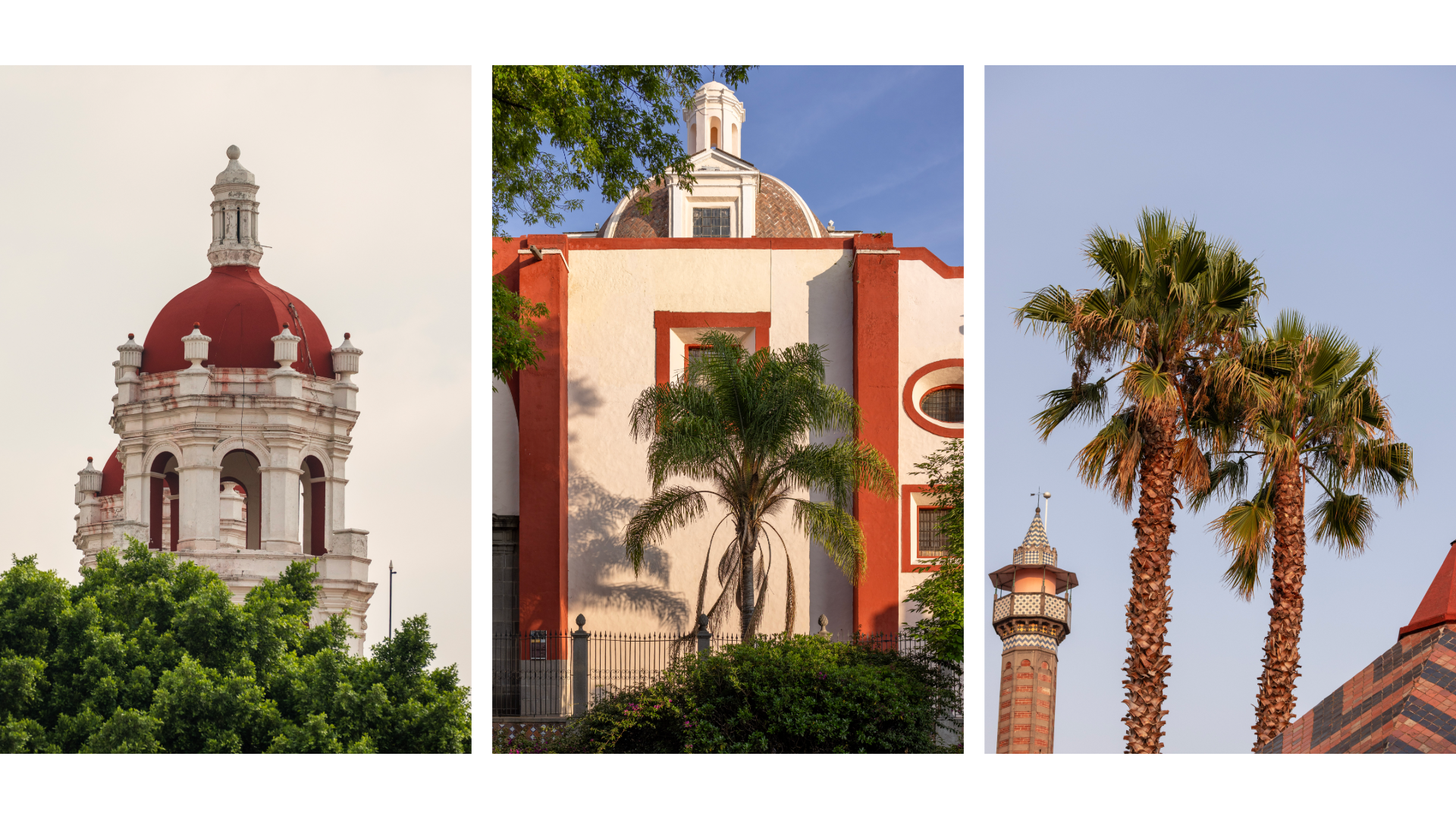
Centro histórico de Puebla, designated UNESCO World Heritage Site (1987)
The Image Before the Building
Most development photography begins too late.
Documentation often starts once construction is underway or after interiors are complete, when the project has already become materially visible. By that stage, the foundational thinking—the references, research, and formative decisions—has largely disappeared from the record.
But the earliest phase of a project may be its most important.
This is where identity is formed.
How should the place feel?
What histories or landscapes inform it?
What kind of experience is being constructed—not just architecturally, but emotionally and culturally?
These questions rarely emerge from spreadsheets or floor plans alone. They develop through observation, travel, dialogue, and visual experimentation.
Photography, in this context, is not simply representational. It becomes a tool for thinking.
A site visit clarifies scale and atmosphere.
Reference imagery reveals aesthetic alignment.
Landscape studies expose how light, weather, and season shape the environment.
The image becomes a way of testing and refining the project before it physically exists.
Research Travel and Reference Gathering
Many hospitality projects begin far from the eventual site itself.
Founders travel. They collect references. They study spaces, materials, service models, agricultural systems, and architectural approaches from other regions and cultures. These journeys are not secondary to development—they are part of its intellectual formation.
Yet these stages are rarely documented with intention.
Research travel often produces scattered phone images, fragmented notes, and isolated inspirations disconnected from a larger narrative structure. Over time, much of the project’s conceptual origin disappears into memory.
Intentional documentation changes this.
When research travel is treated as part of the development process, visual references become more than inspiration—they become working material.
Patterns emerge.
Design language sharpens.
Operational ideas become visible.
The project begins to recognize itself.
Making Vision Legible
Every founder faces the same fundamental challenge: translating internal vision into shared understanding.
Investors need confidence.
Architects need clarity.
Hospitality teams need continuity.
Partners need alignment.
Images accelerate this process.
A carefully documented site visit can communicate more than pages of written explanation. A sequence of landscape studies can establish emotional tone before a single rendering is complete. Early visual documentation creates coherence around a project that still exists primarily in conceptual form.
It allows others to enter the vision earlier—and with greater precision.
In this sense, photography becomes infrastructural.
Not decoration.
Not marketing.
A working component of development itself.
Beyond Marketing Imagery
There is a tendency to think of photography as something that arrives at the end of a project, once the space is polished and operational.
But by then, much of the project’s most meaningful history has already passed.
The early uncertainty.
The first walks across the land.
The conversations that shaped the philosophy of the place.
The evolution of materials, references, and design decisions.
These moments are often invisible to future guests, yet they define the character of the project itself.
To document them is to preserve the intellectual and emotional formation of place—not simply its finished surface.
The Beginning of the Archive
Every development project creates an archive, whether intentionally or accidentally.
The question is whether that archive will exist as scattered fragments or as a coherent visual history.
When documentation begins early, the project gains continuity. The evolution from concept to construction to operation becomes traceable. The founding vision remains visible inside the final outcome rather than disappearing beneath it.
This is not simply valuable for marketing. It is valuable for culture, operations, investor relations, and long-term legacy.
Because great hospitality projects are rarely remembered only for what they looked like.
They are remembered for the clarity of vision that shaped them from the beginning.
Private-Record partners with founders, developers, and hospitality teams from the earliest stages of development—using visual documentation to help projects become legible, aligned, and enduring long before construction is complete.
