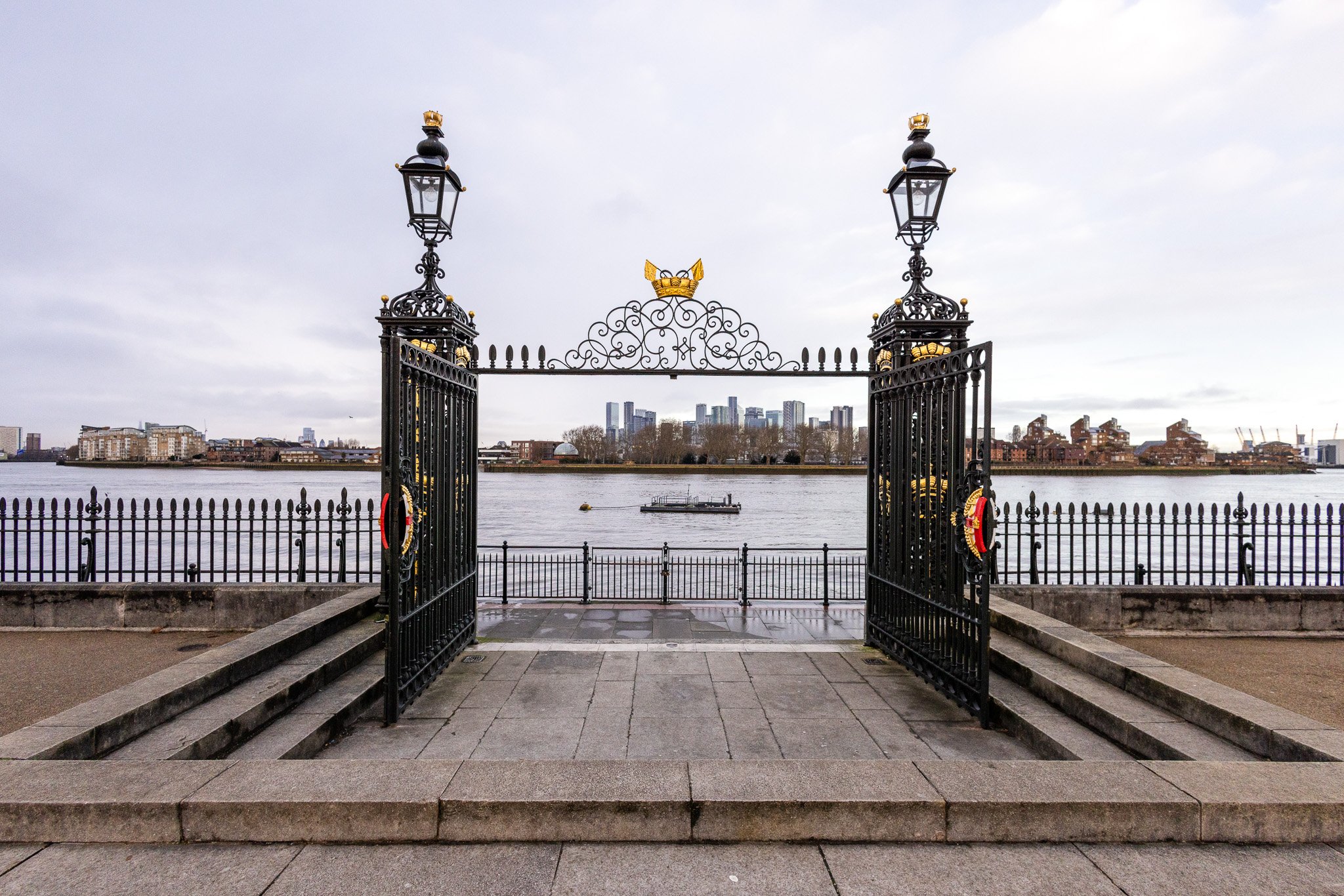
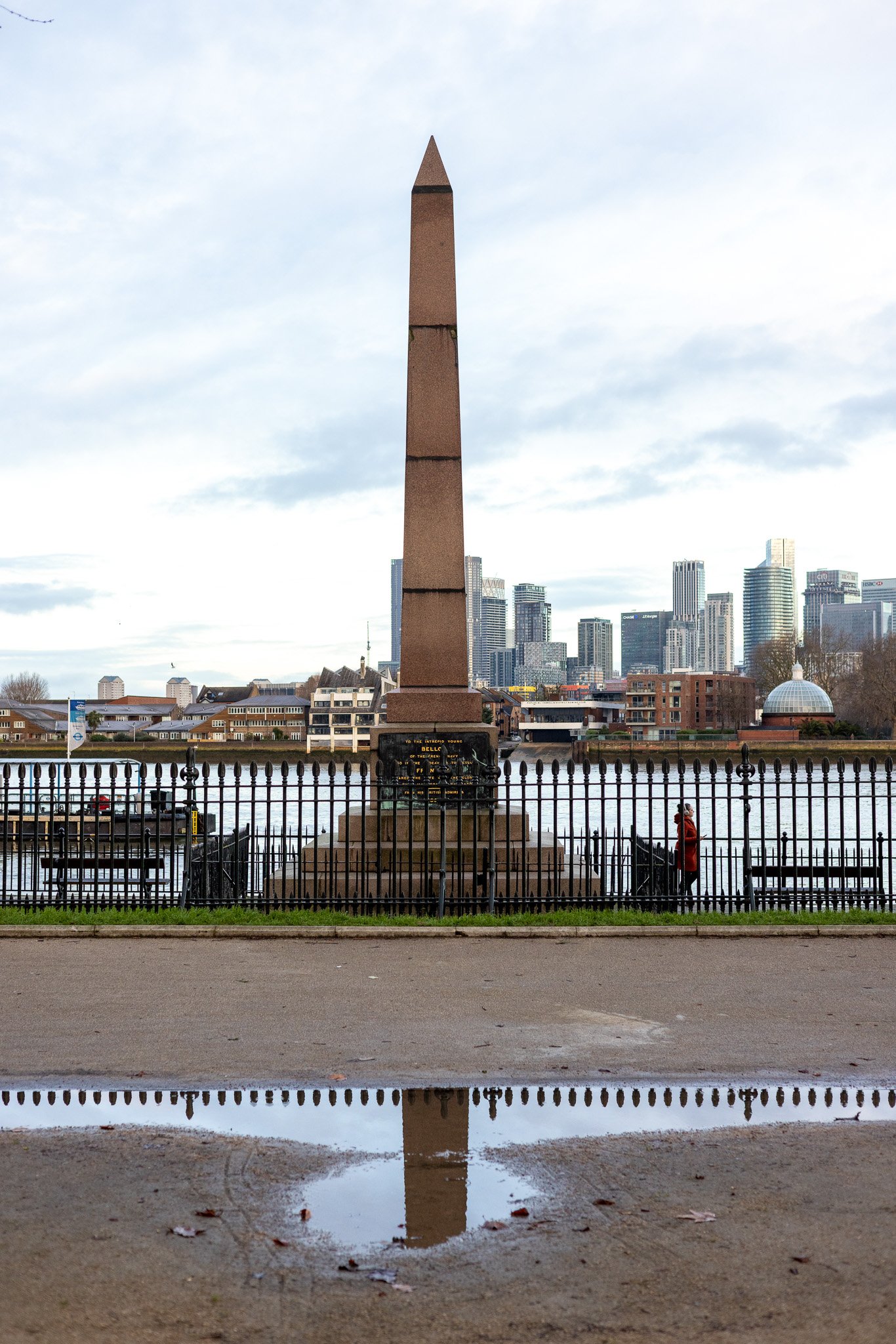
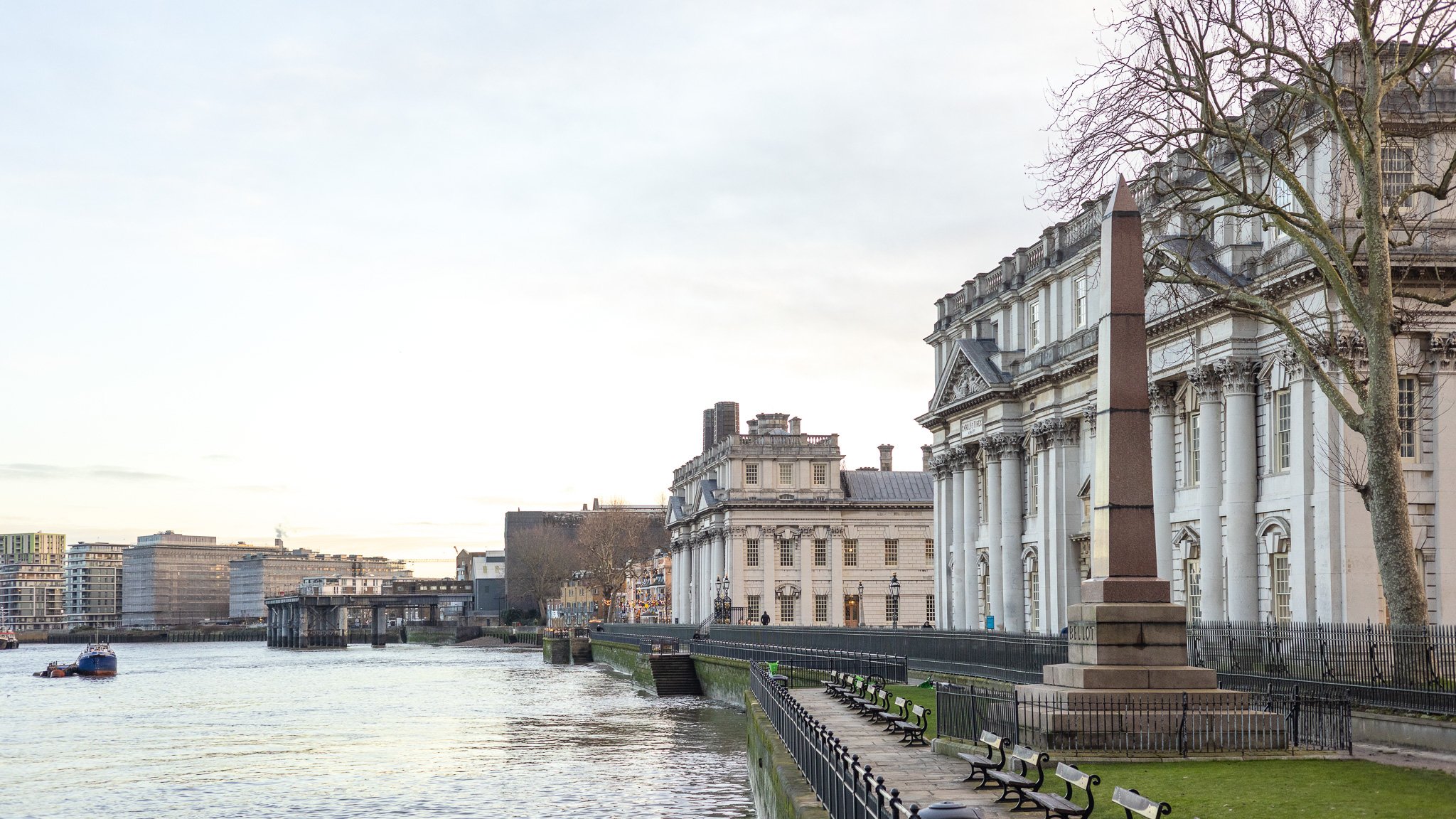
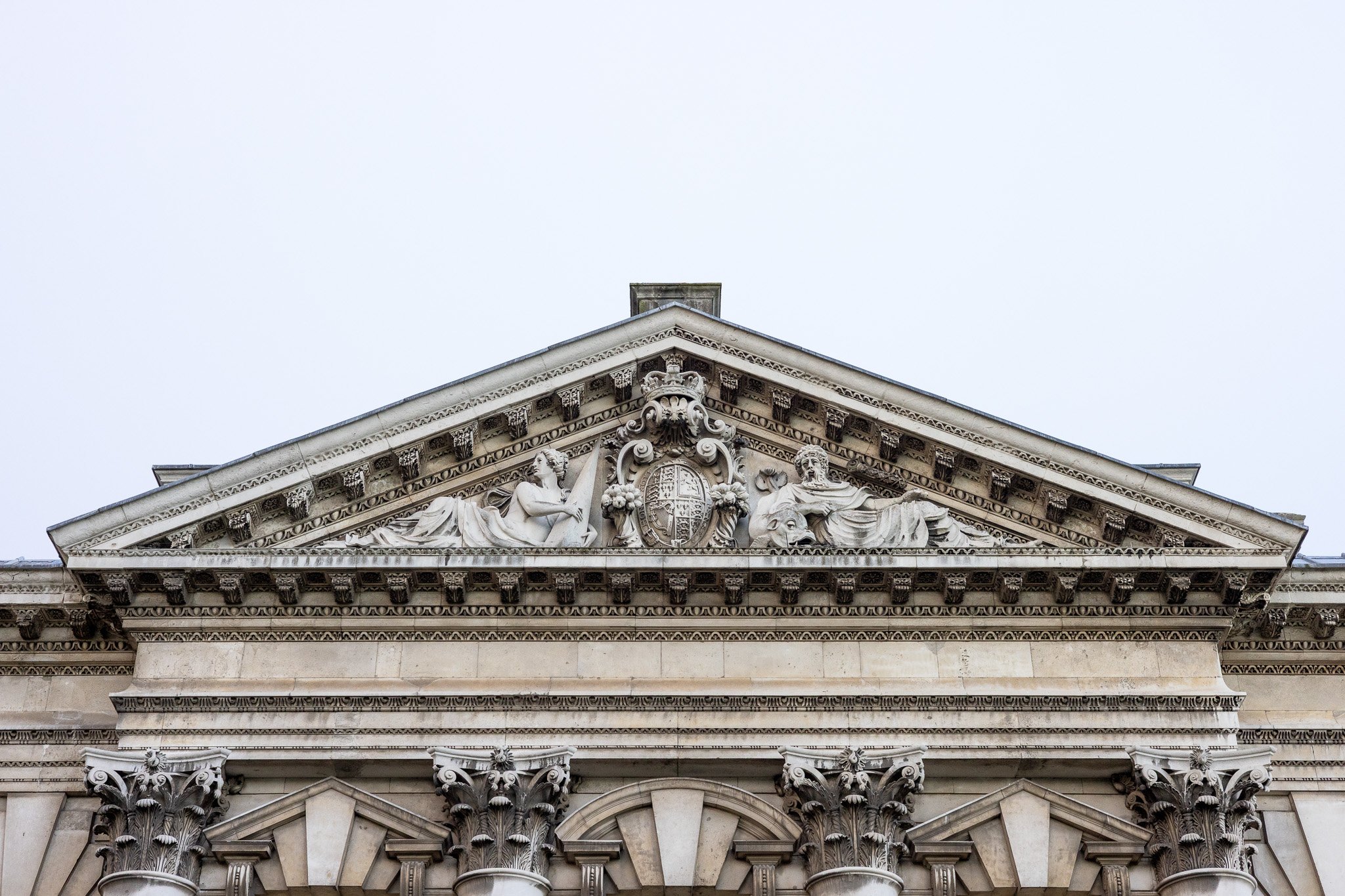
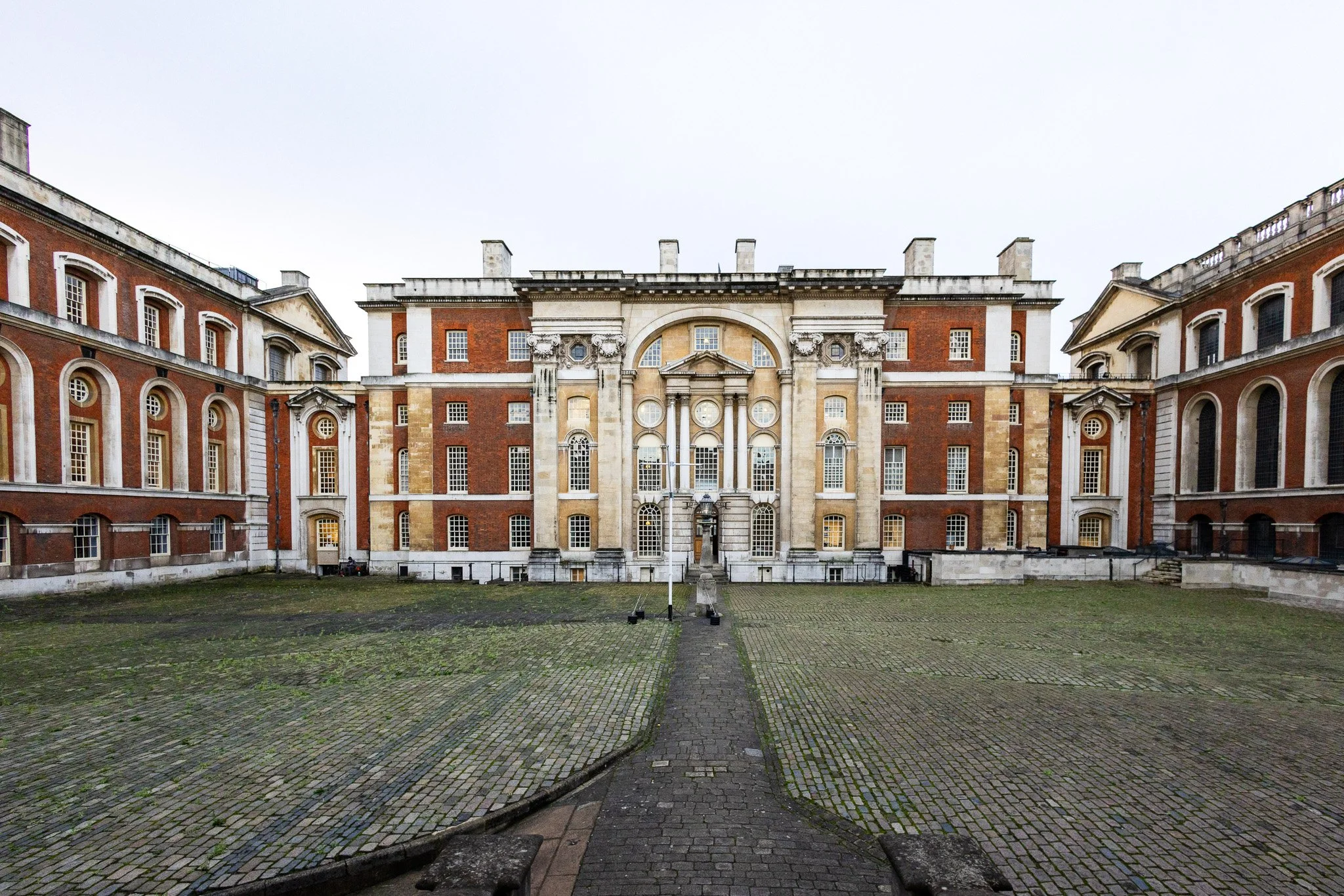
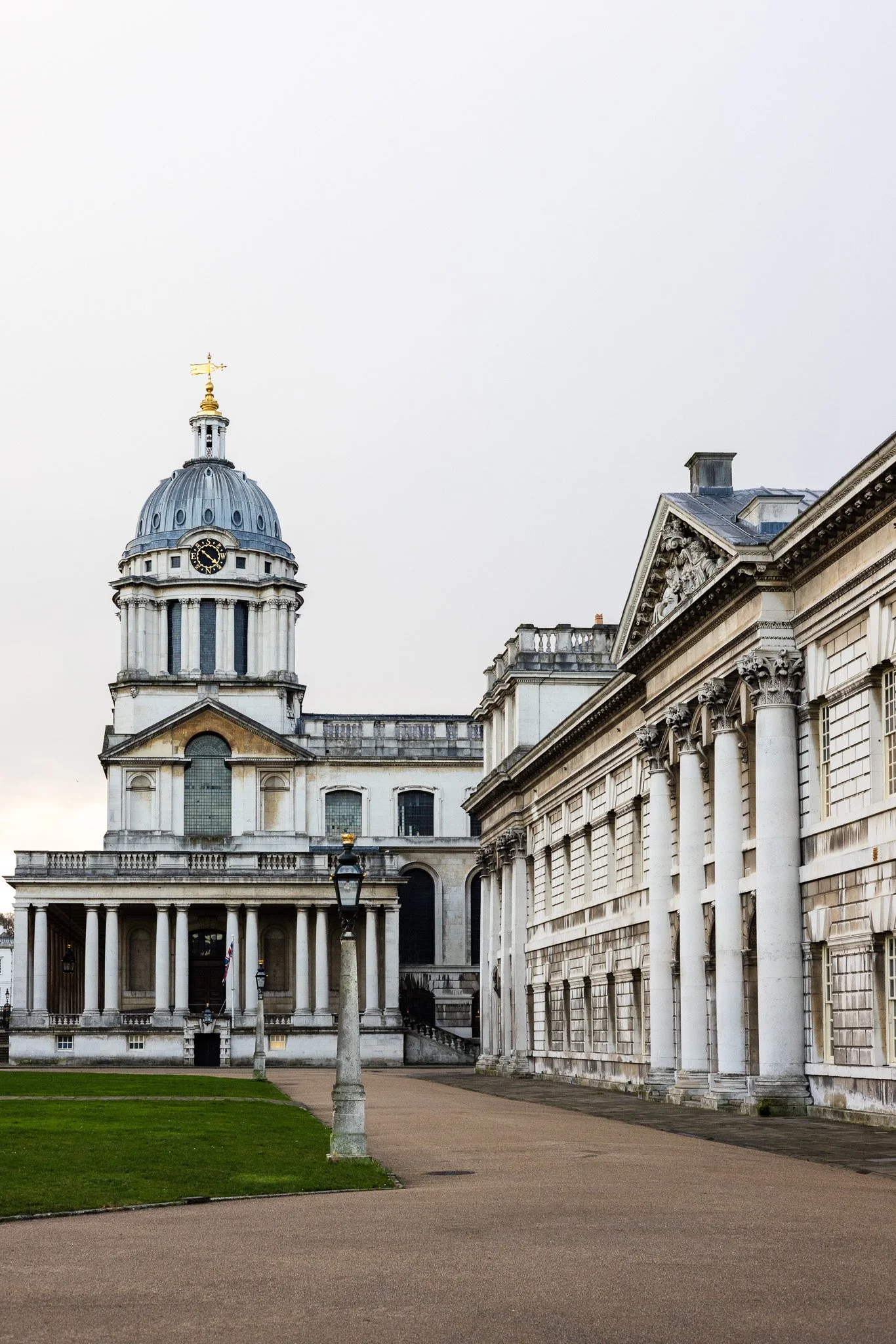
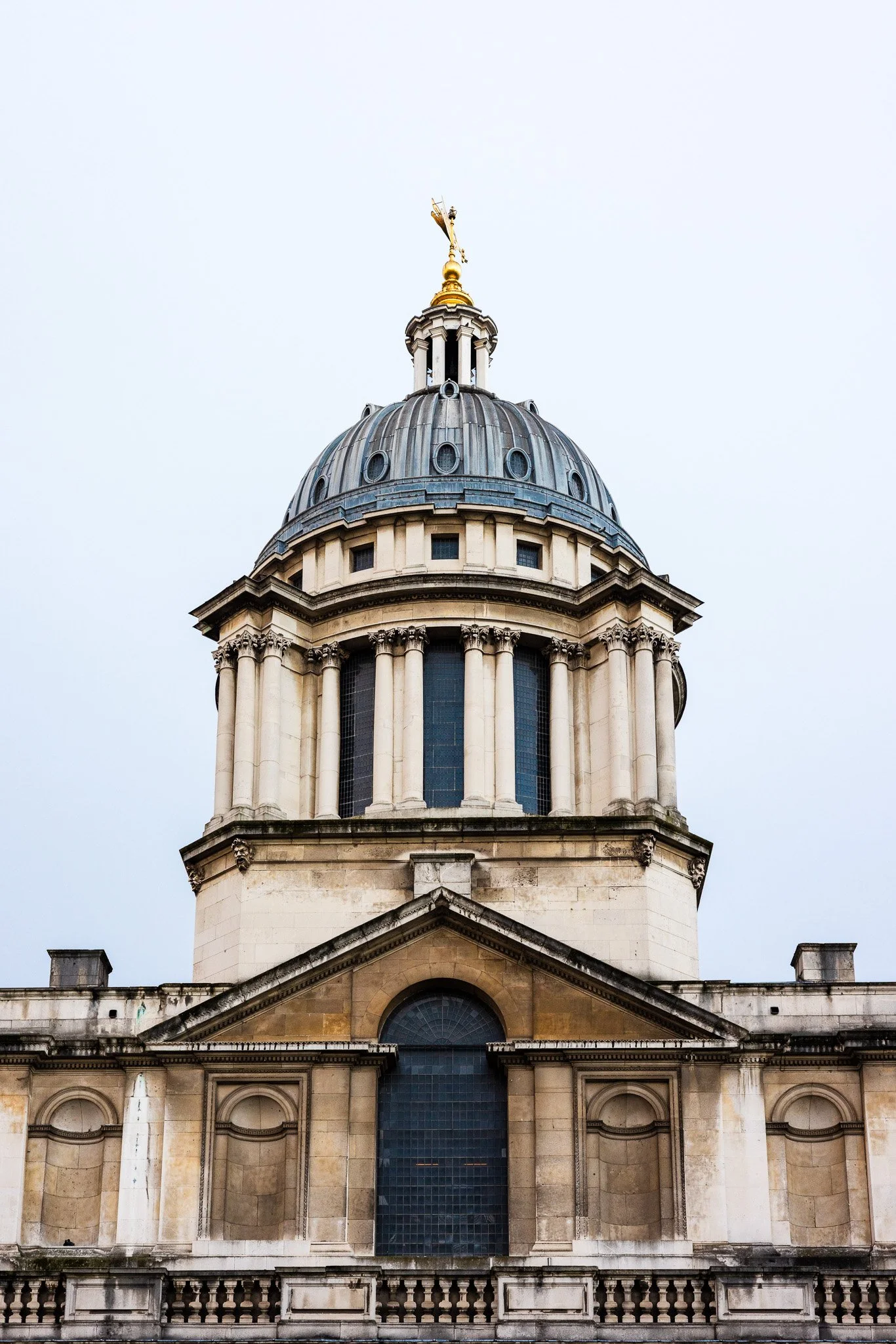
The Maritime Greenwich UNESCO World Heritage Site, inscribed in 1997, is located in the Royal Borough of Greenwich, London. The site covers 109.5 hectares, including the Thames waterfront, Greenwich Park, and historic buildings. The Royal Observatory, founded in 1675 by King Charles II and designed by Sir Christopher Wren, is the birthplace of the Prime Meridian (0° longitude) and Greenwich Mean Time (GMT). It was crucial for the development of British imperial naval navigation and timekeeping. Instruments and observations made at the observatory helped solve the "longitude problem," revolutionizing global navigation.
The “longitude problem” represented one of the most consequential scientific and navigational challenges of the early imperial period: determining a ship’s east–west position at sea. While latitude could be calculated through observations of the sun and stars, longitude required a reliable means of comparing local time with the time at a fixed reference location. Without this capacity, maritime navigation remained vulnerable to uncertainty, often resulting in catastrophic losses of ships, sailors, and cargo. In October 1707, four British Royal Navy warships were wrecked off the Isles of Scilly, resulting in the deaths of approximately 1,400–2,000 sailors. The disaster, involving navigational errors and the inability to determine position with sufficient accuracy, became emblematic of the dangers confronting British maritime power.
In 1714, Parliament passed the Longitude Act, establishing financial rewards of up to £20,000 for a practical solution. Among those who pursued the challenge was the English clockmaker John Harrison, whose experimental marine timekeepers (H1–H5) sought to preserve accurate reference time despite the movement, temperature fluctuations, and environmental instability of ocean travel. His fourth timekeeper, H4, completed a successful transatlantic trial to Jamaica in 1761–1762, demonstrating the feasibility of determining longitude through precision timekeeping. Yet the significance of this technological achievement extended beyond navigational safety. Accurate longitude measurement facilitated the expansion and coordination of maritime trade, naval operations, and colonial enterprise. The capacity to establish geographic position with increasing precision contributed to the transformation of oceanic space into a system of measurable coordinates, enabling new forms of territorial knowledge, commercial extraction, and imperial administration. What emerged was not simply a more accurate means of navigation, but an increasingly powerful relationship between scientific measurement, geographic representation, and the exercise of state authority.
Greenwich, England, became both a symbolic and institutional center of Britain's expanding maritime authority. Established in 1675, the Royal Observatory played a central role in the scientific pursuit of accurate longitude measurement, while the nearby Royal Naval College embodied the relationship between navigational knowledge, naval power, and imperial expansion. In 1884, the International Meridian Conference adopted the meridian passing through Greenwich as the international Prime Meridian, establishing a common reference point for the global system of longitude. This was not merely a geographic or scientific decision; it reflected the geopolitical dominance of British maritime infrastructure and the authority of European institutions to establish ostensibly universal standards. Longitude—enabled by precise timekeeping—allowed Britain to control maritime navigation, enforce colonial borders, and standardize maps. The designation of Greenwich as longitude zero positioned Britain at the conceptual center of global spatial orientation, reinforcing a cartographic order through which territory could be measured, represented, and administered.
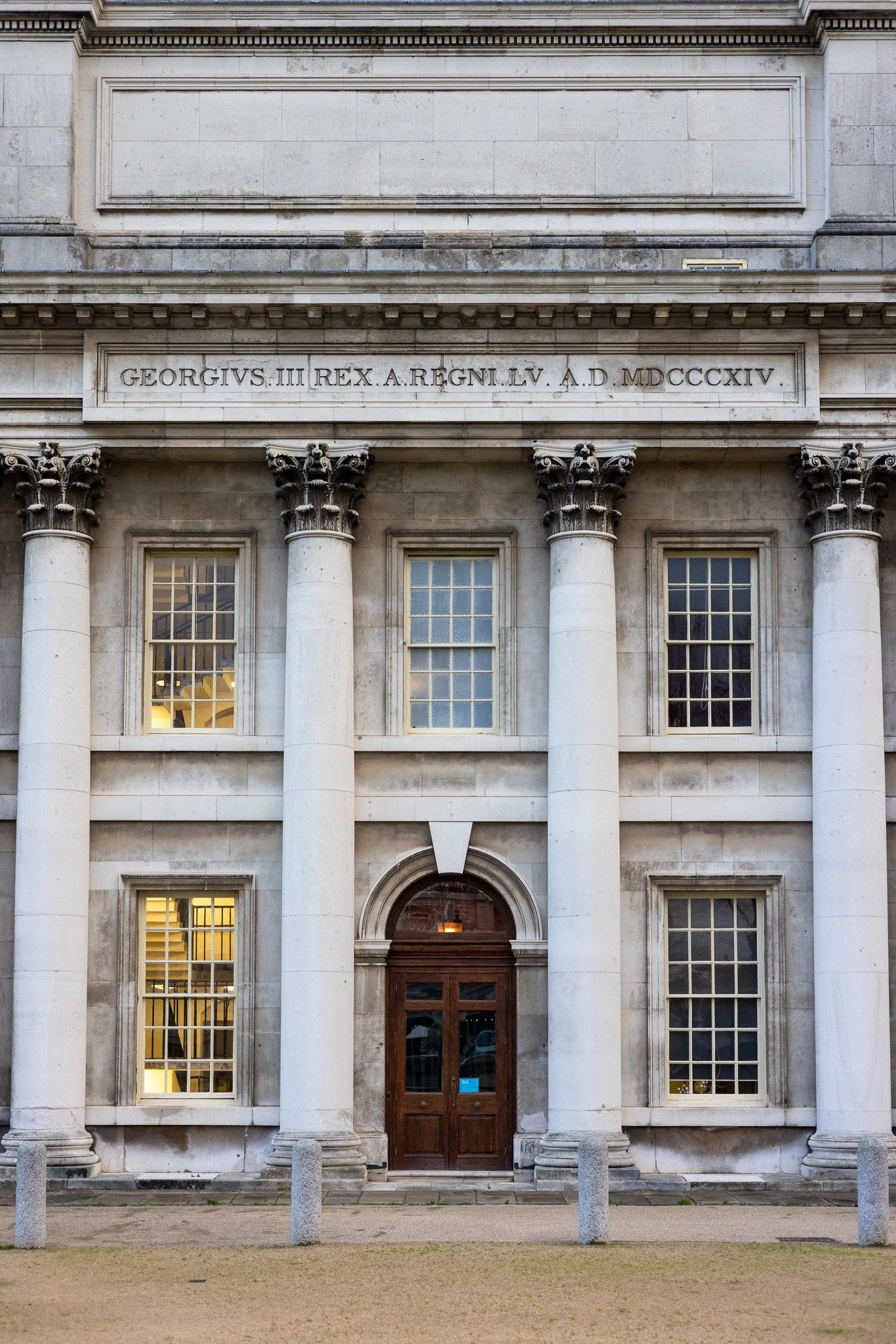
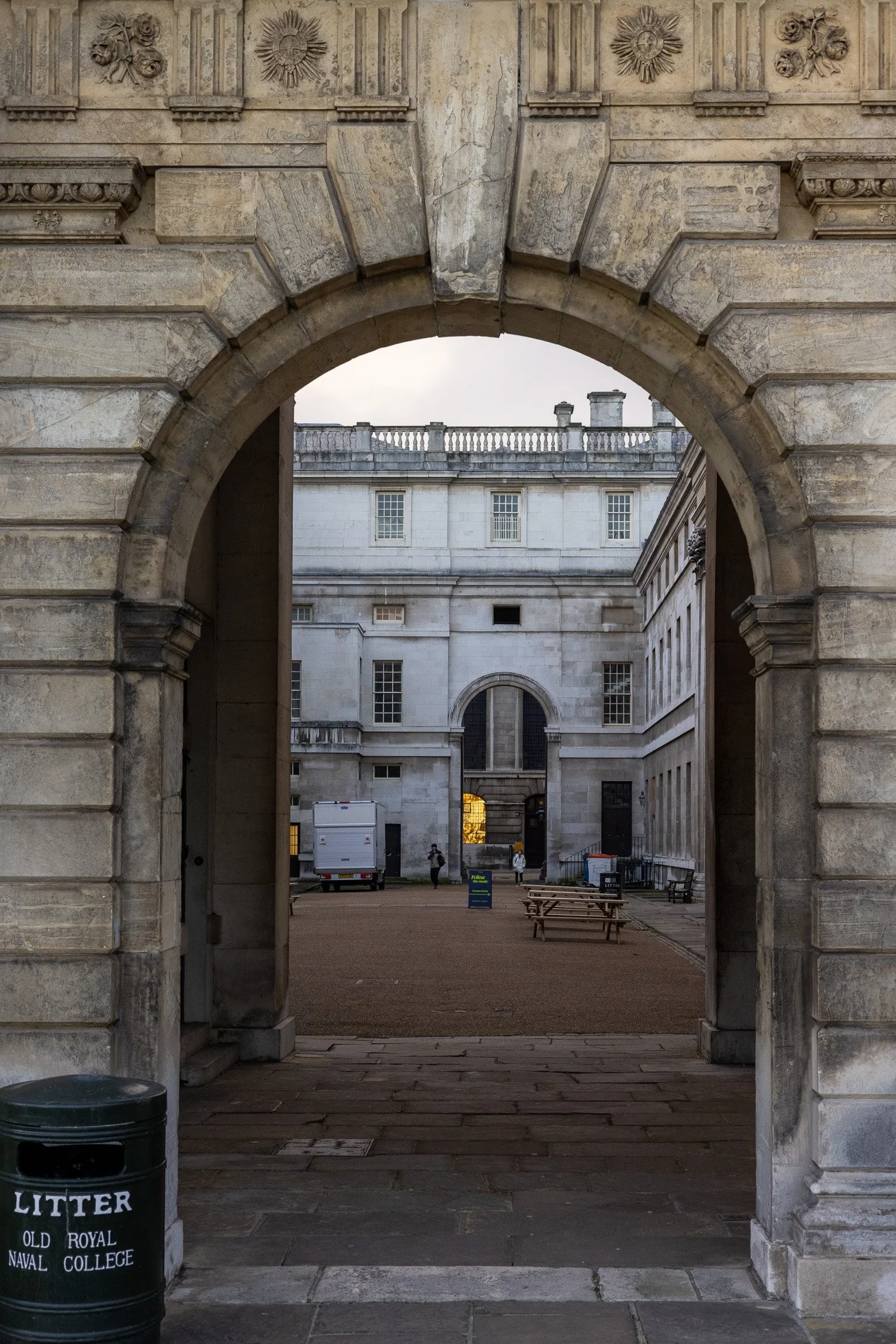
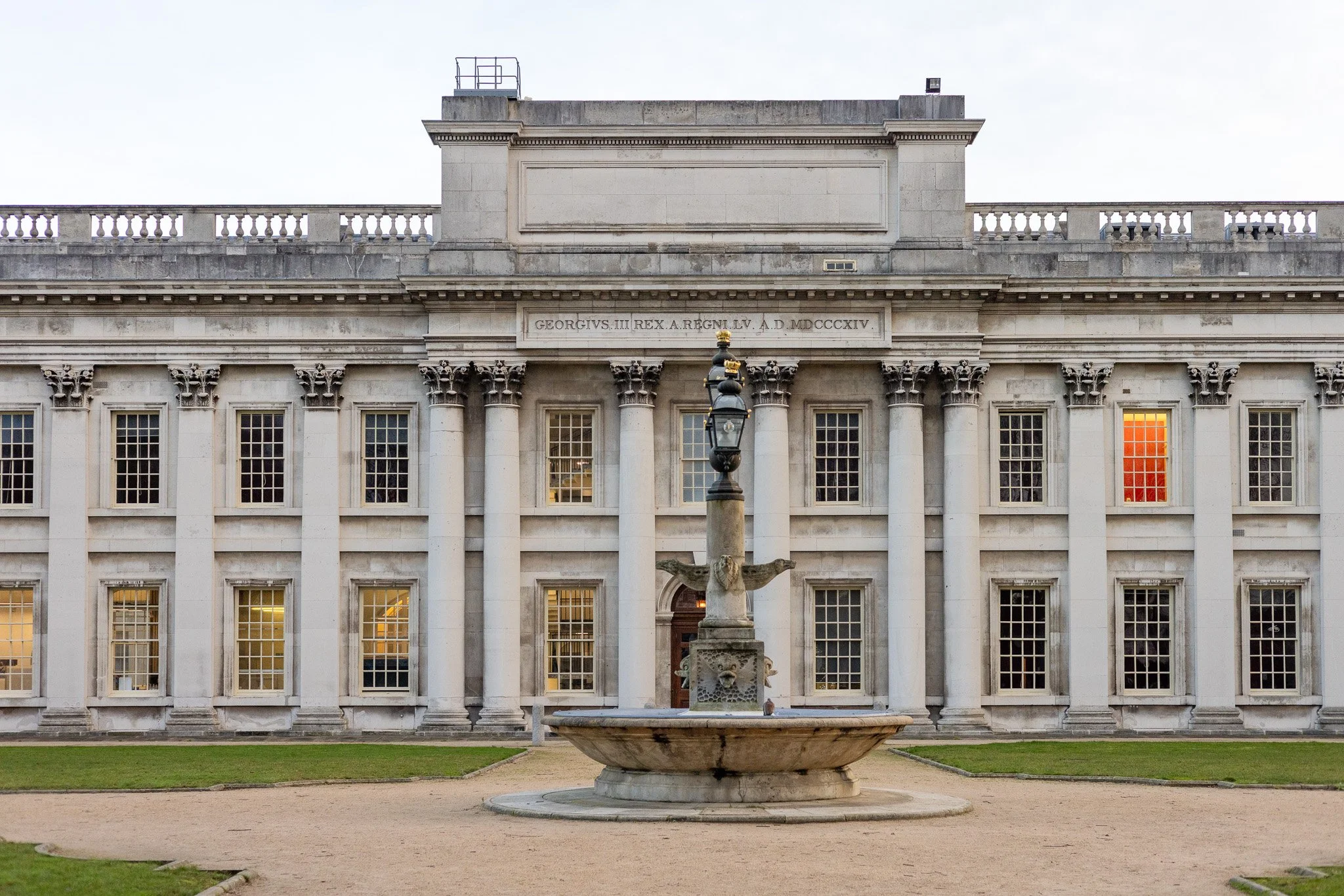
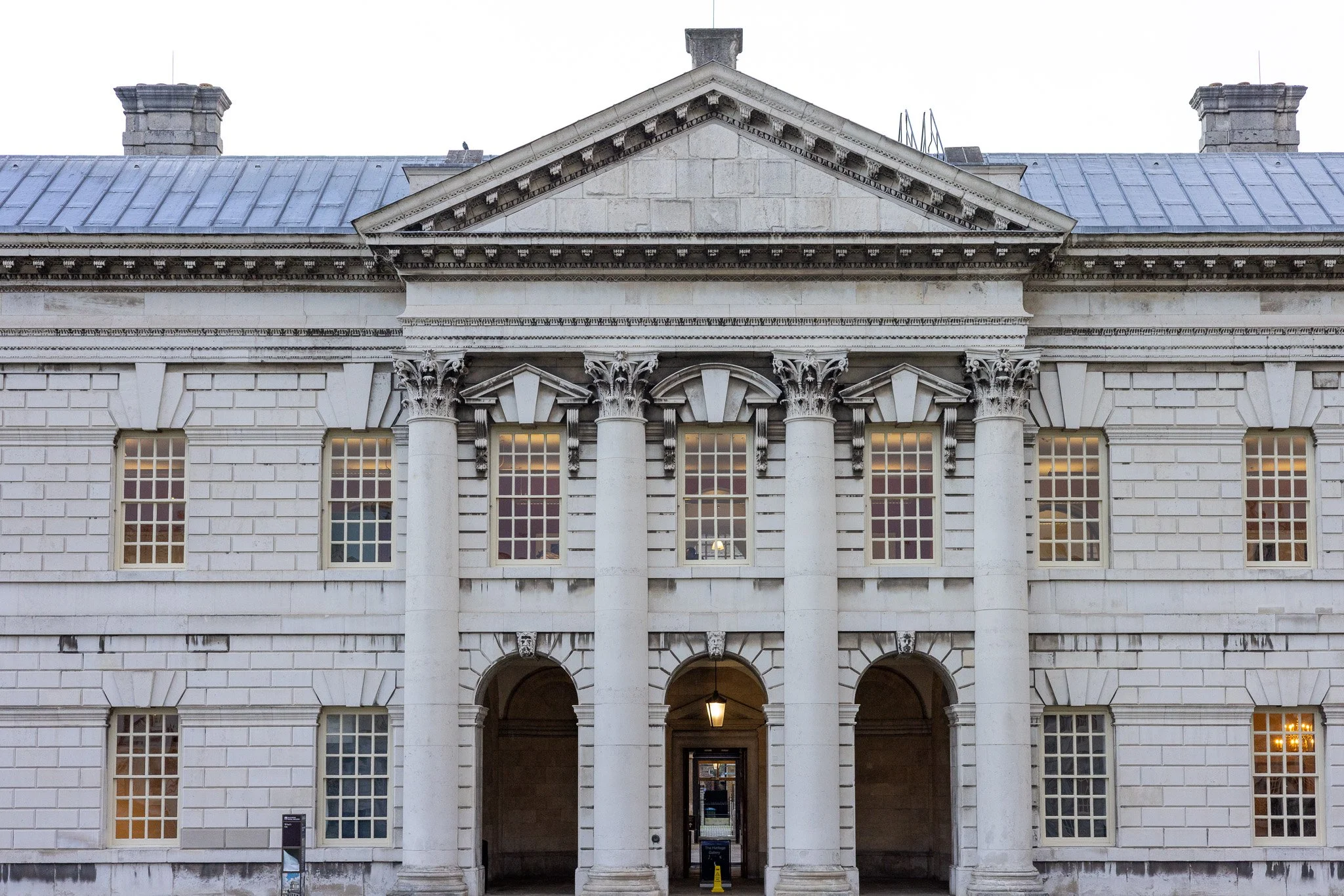
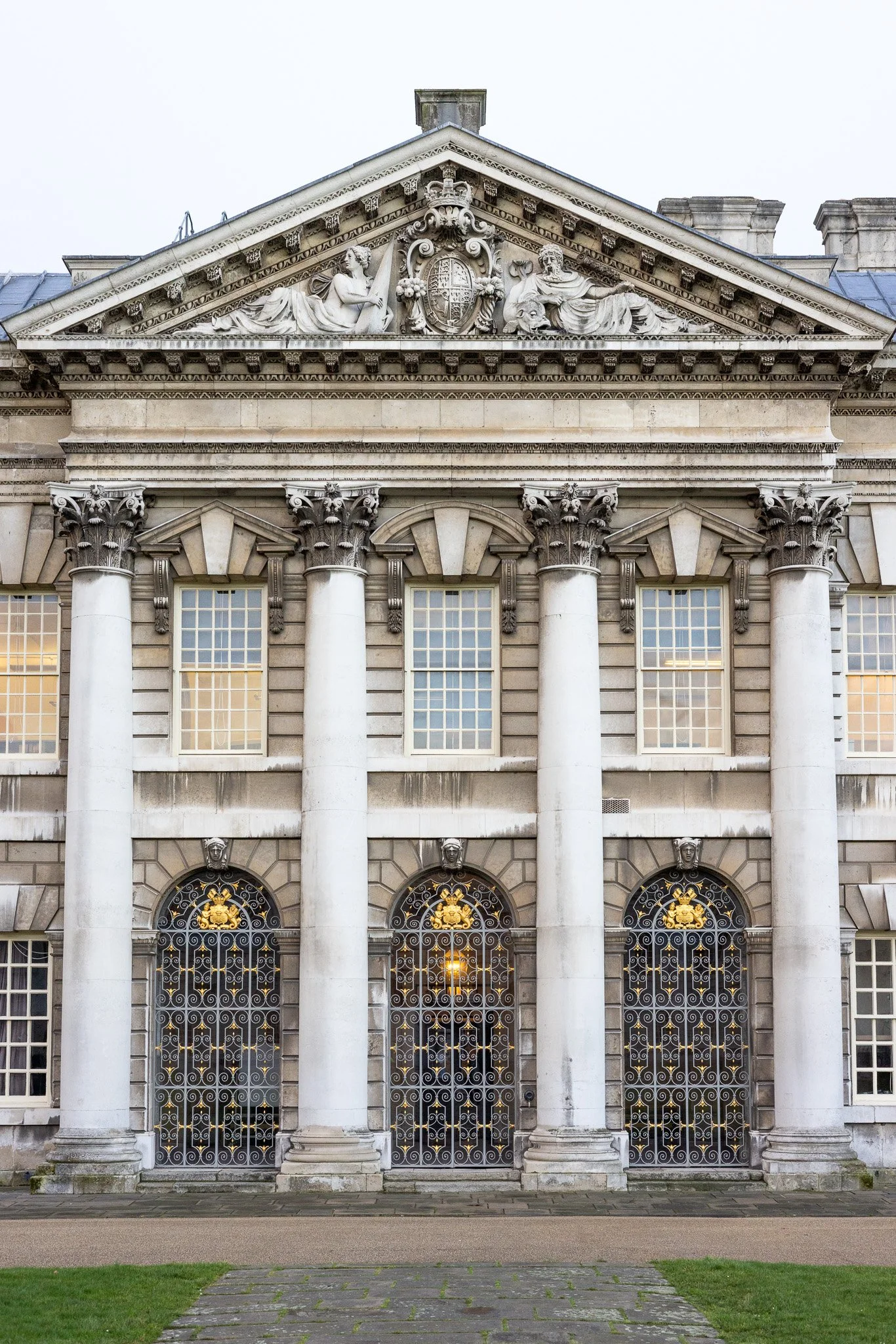
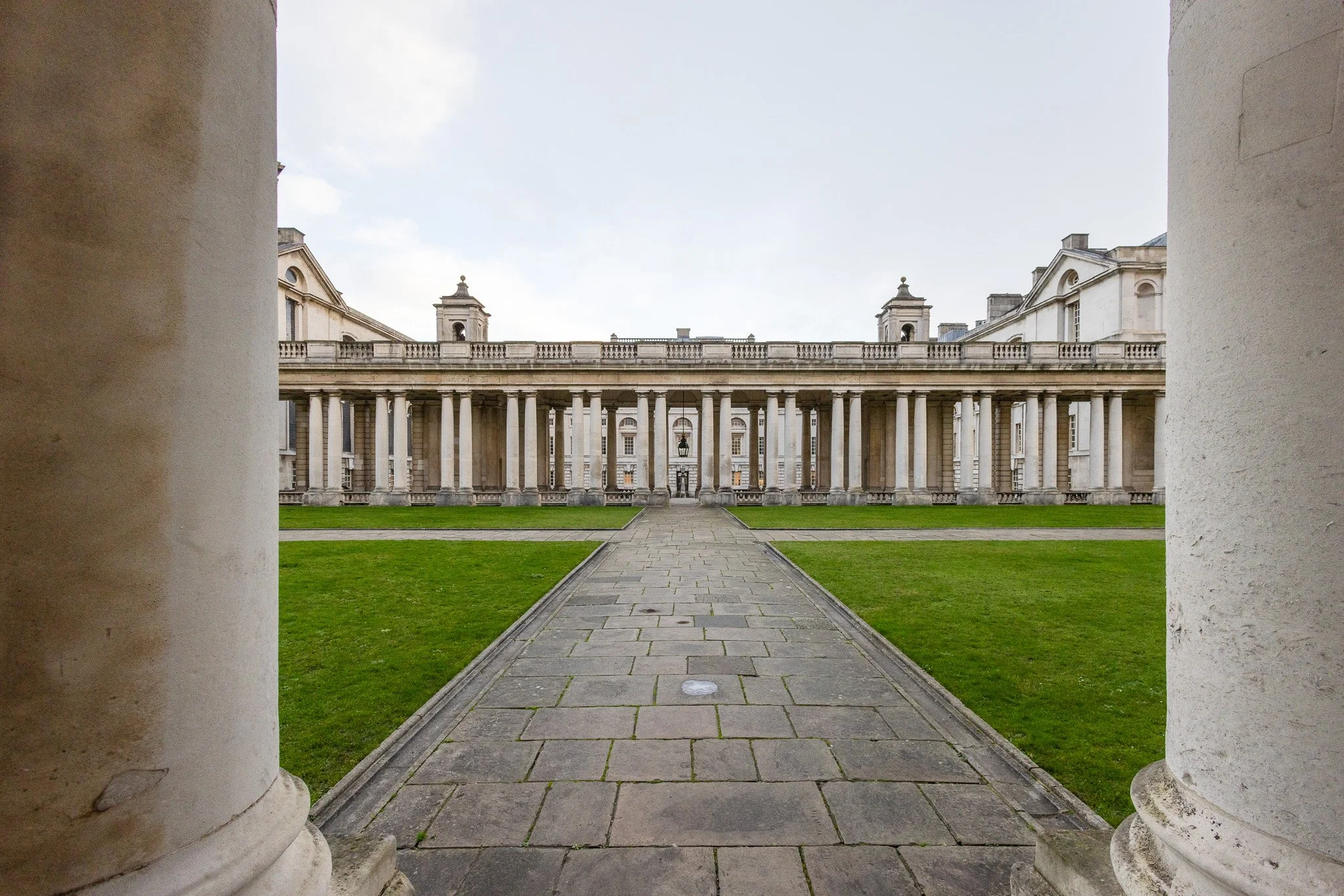
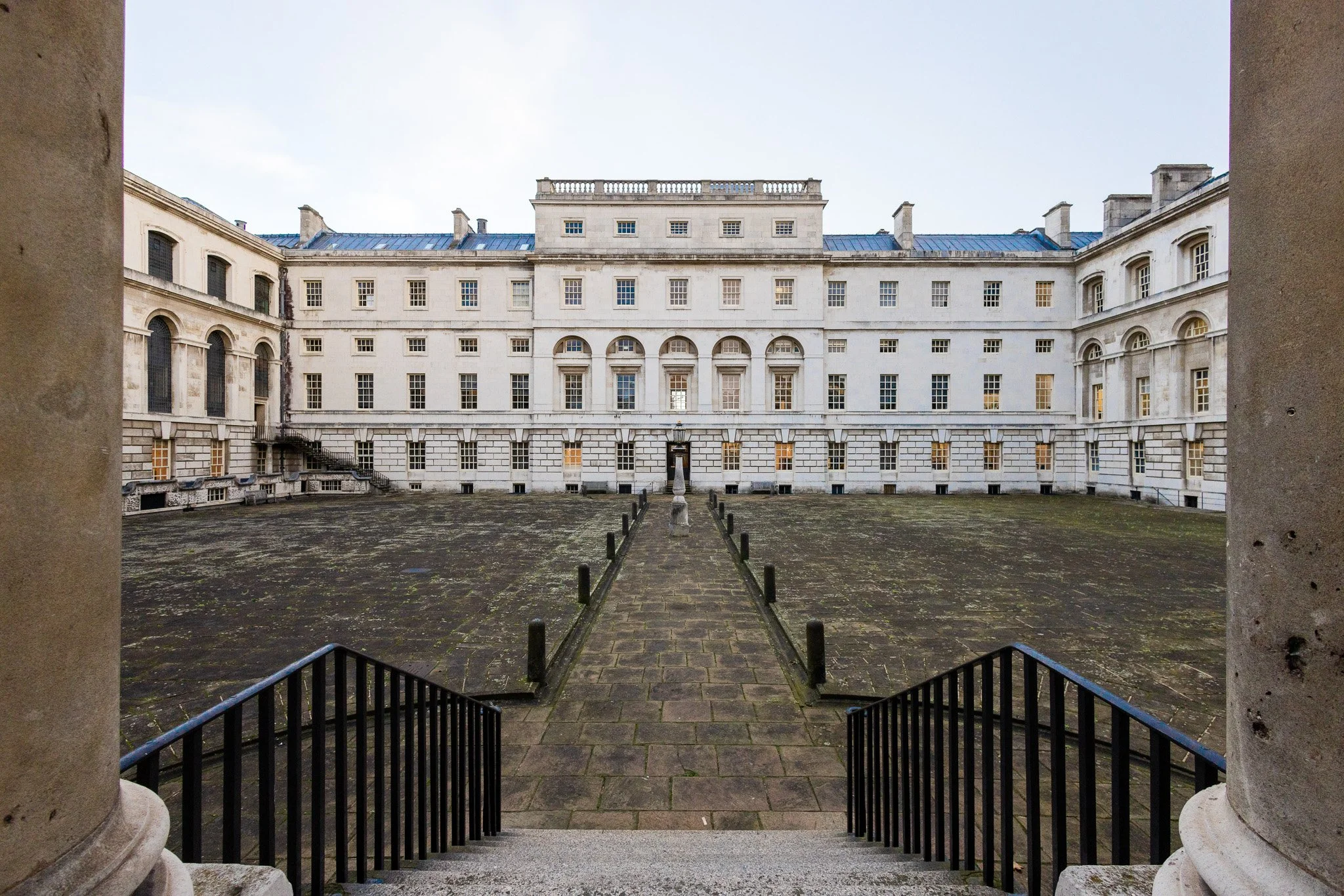
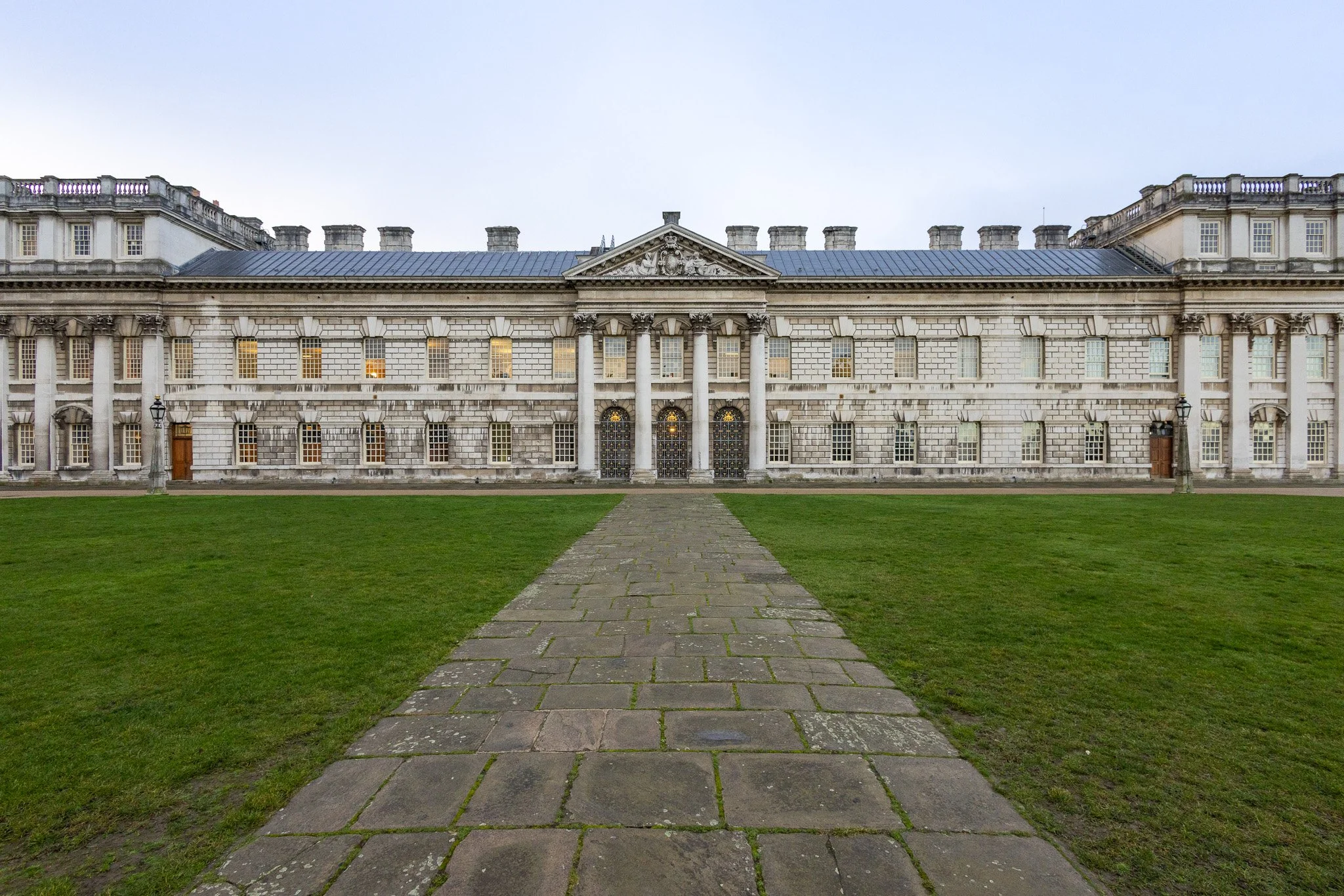
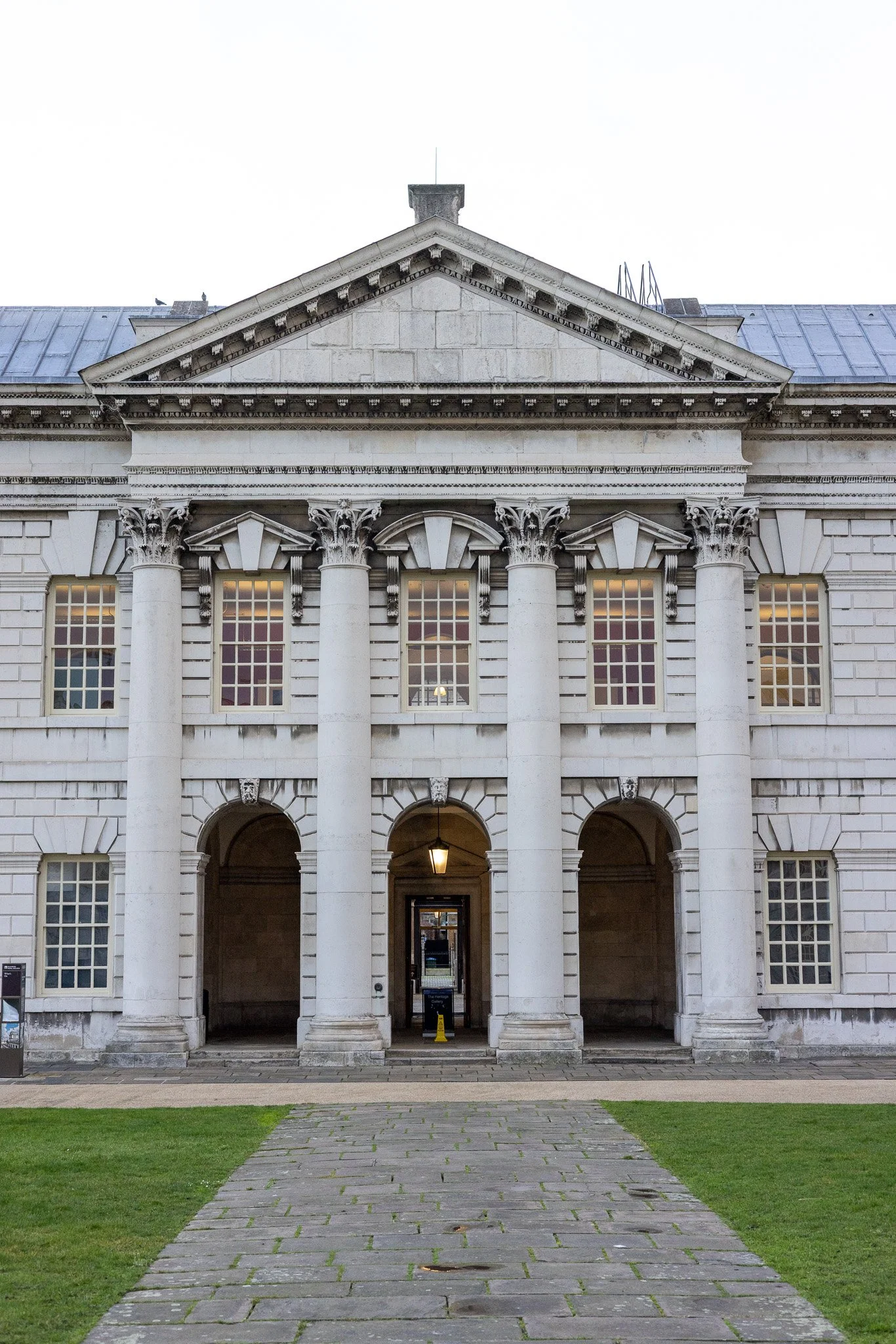
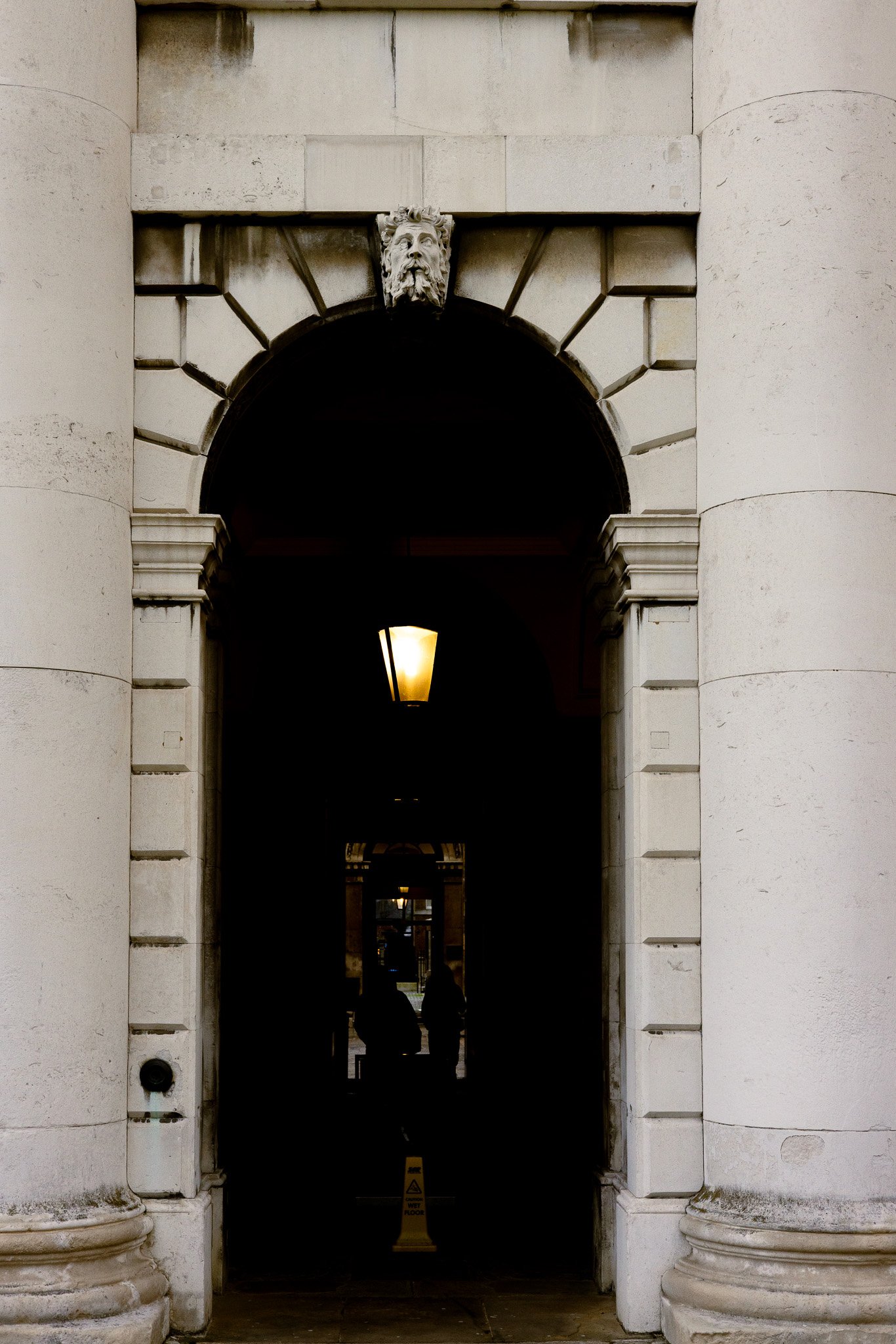
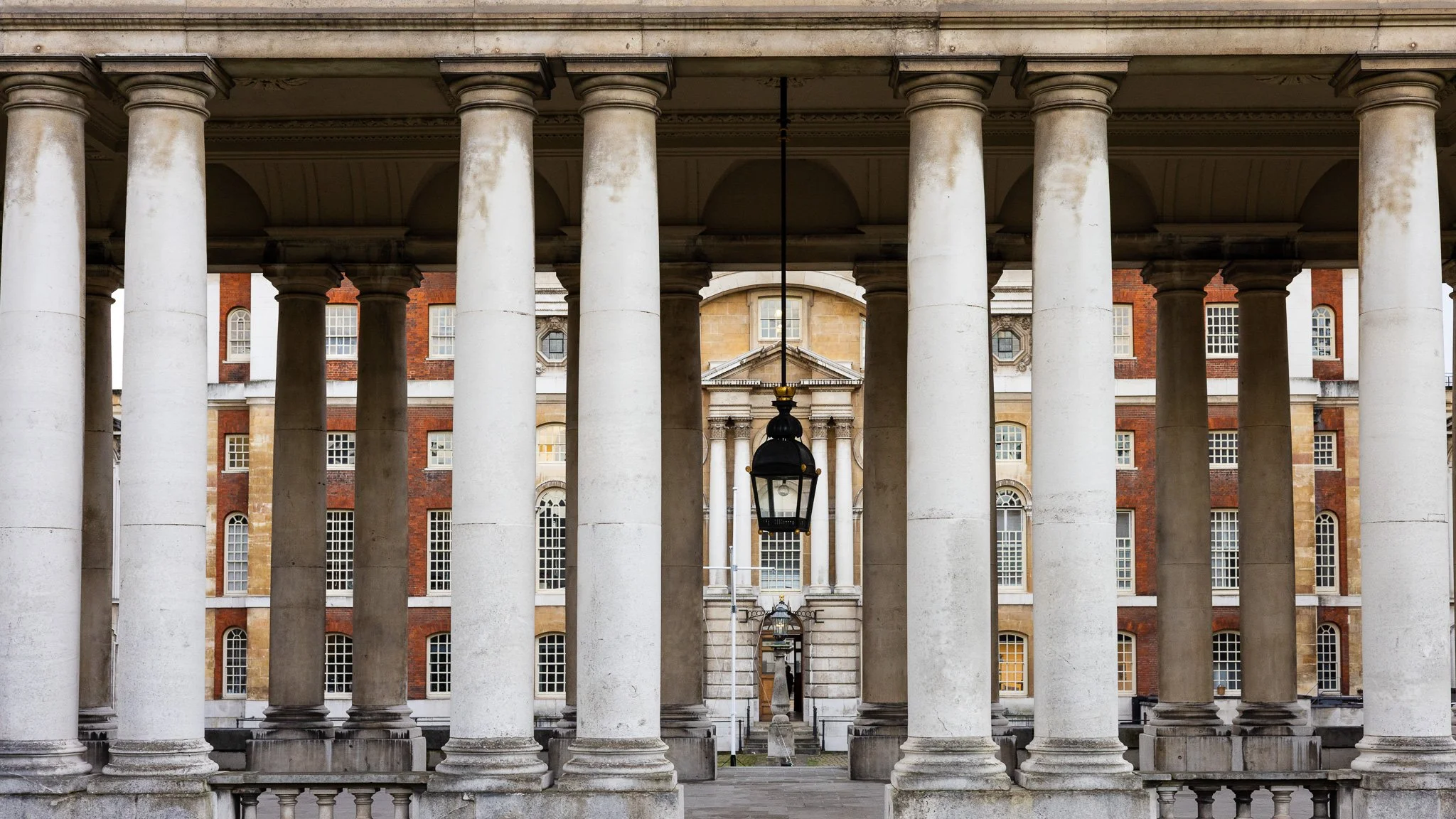
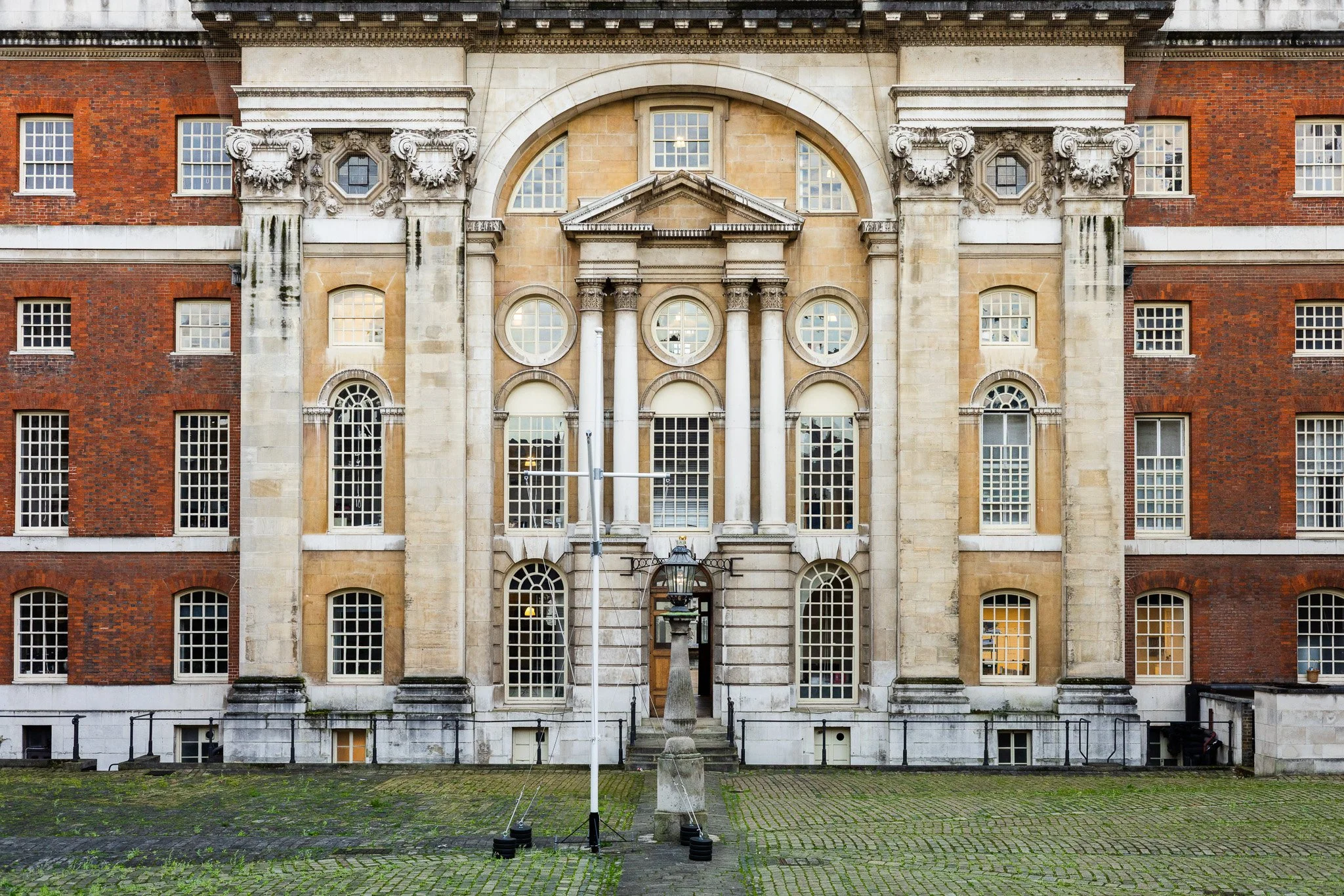
Designed by Sir Christopher Wren and Nicholas Hawksmoor, the Old Royal Naval College was originally built as the Royal Hospital for Seamen. Its design is an enduring symbol of Britain's maritime heritage and is an example of Baroque and classical architecture, blending practical maritime functions with artistic grandeur. The symmetrical layout, grand facades, and detailed interiors reflect Britain’s aspirations during its rise as a global power.
Greenwich’s history is intertwined with Britain’s maritime dominance. The Royal Navy, pivotal in the establishment of the British Empire, was closely associated with this site during the 17th and 18th centuries.
PAINTED HALL
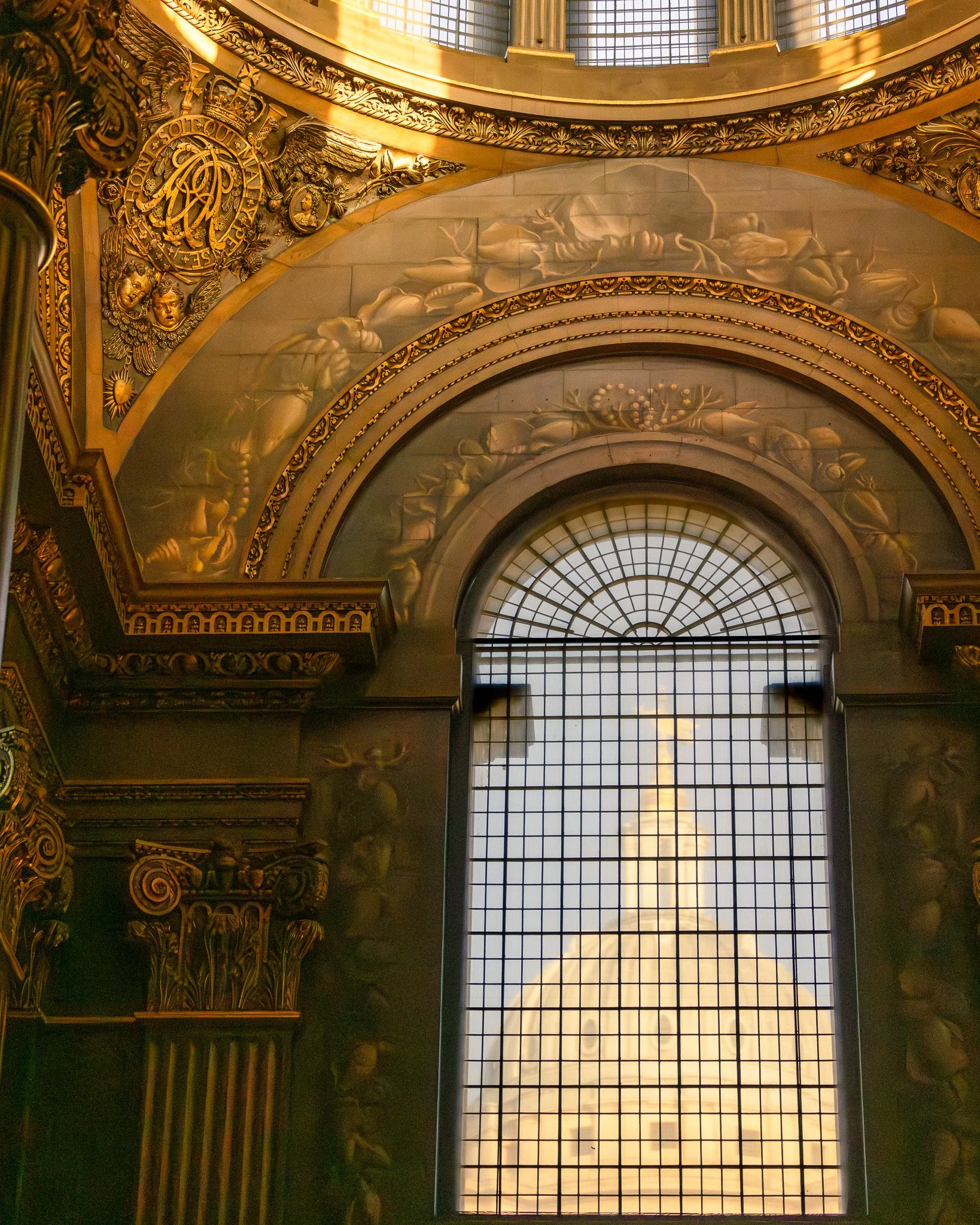
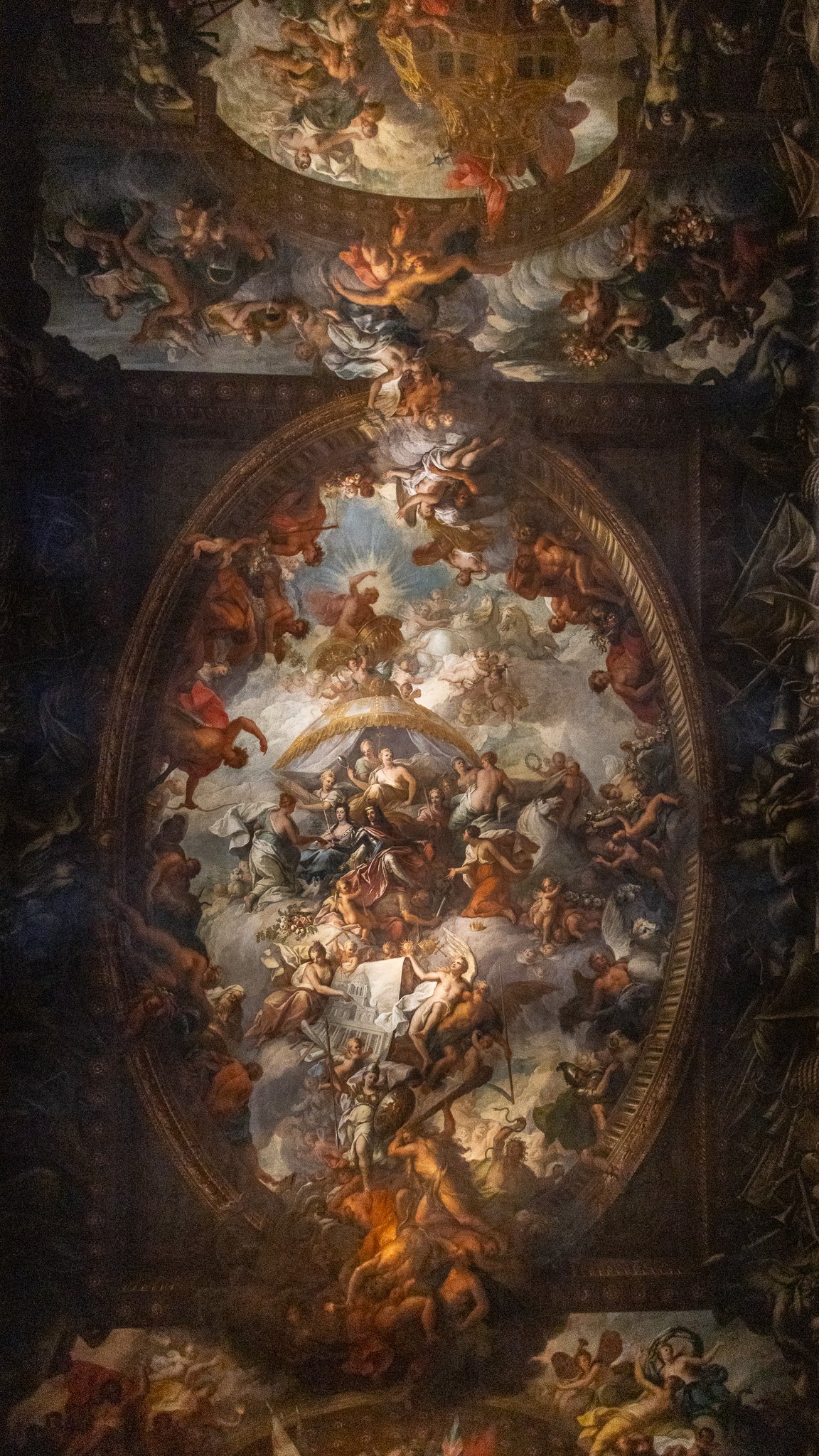
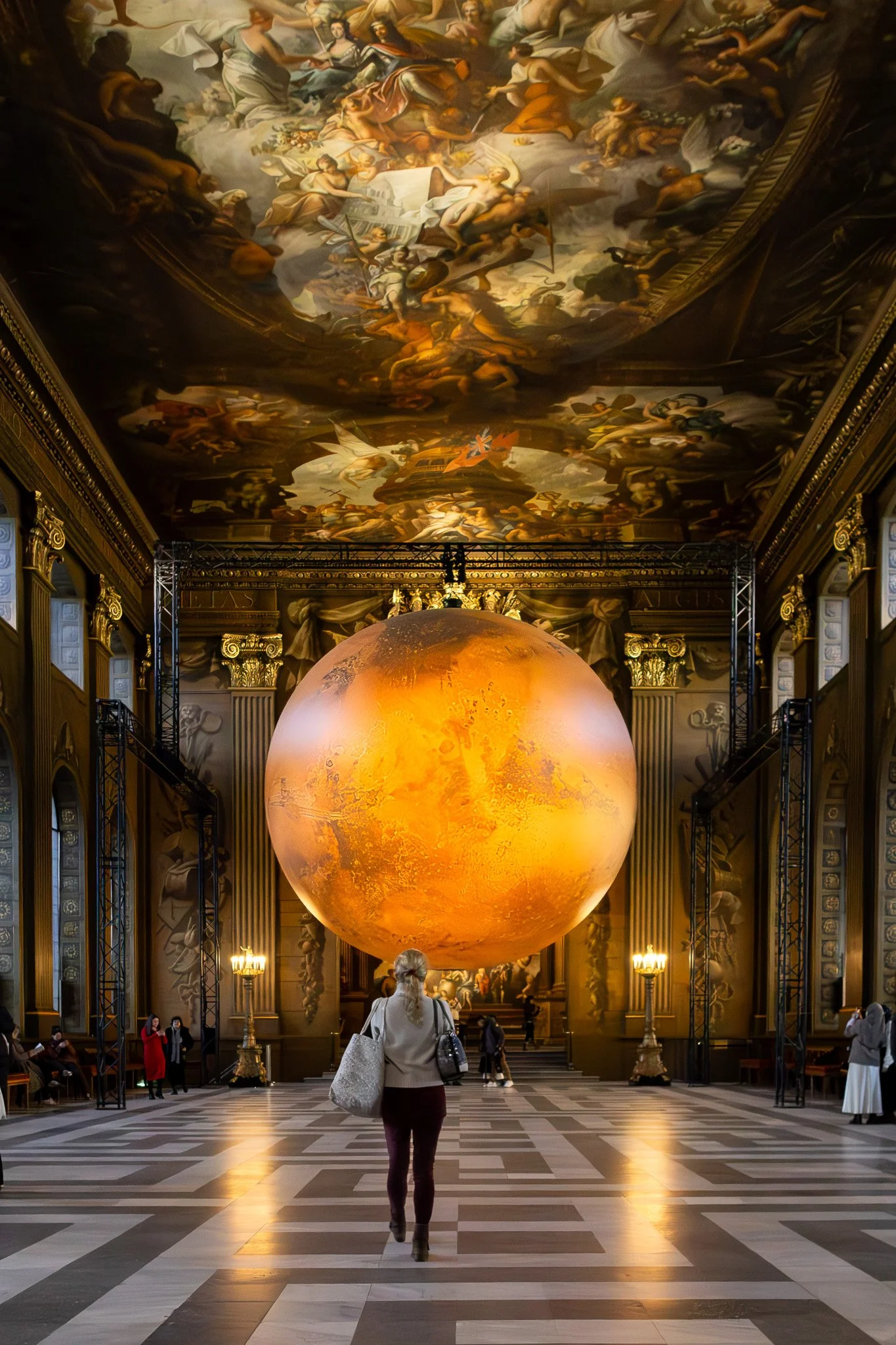
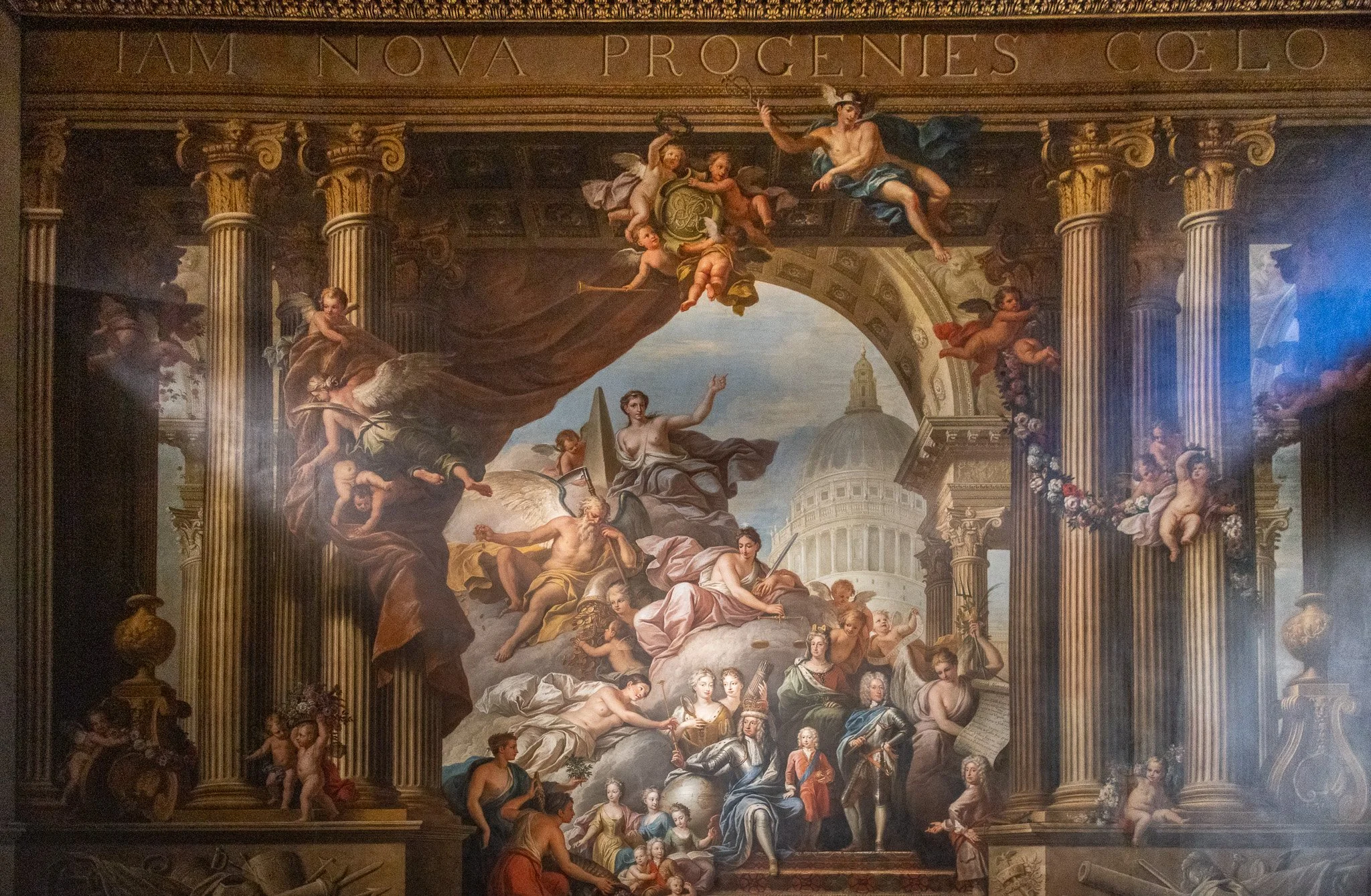
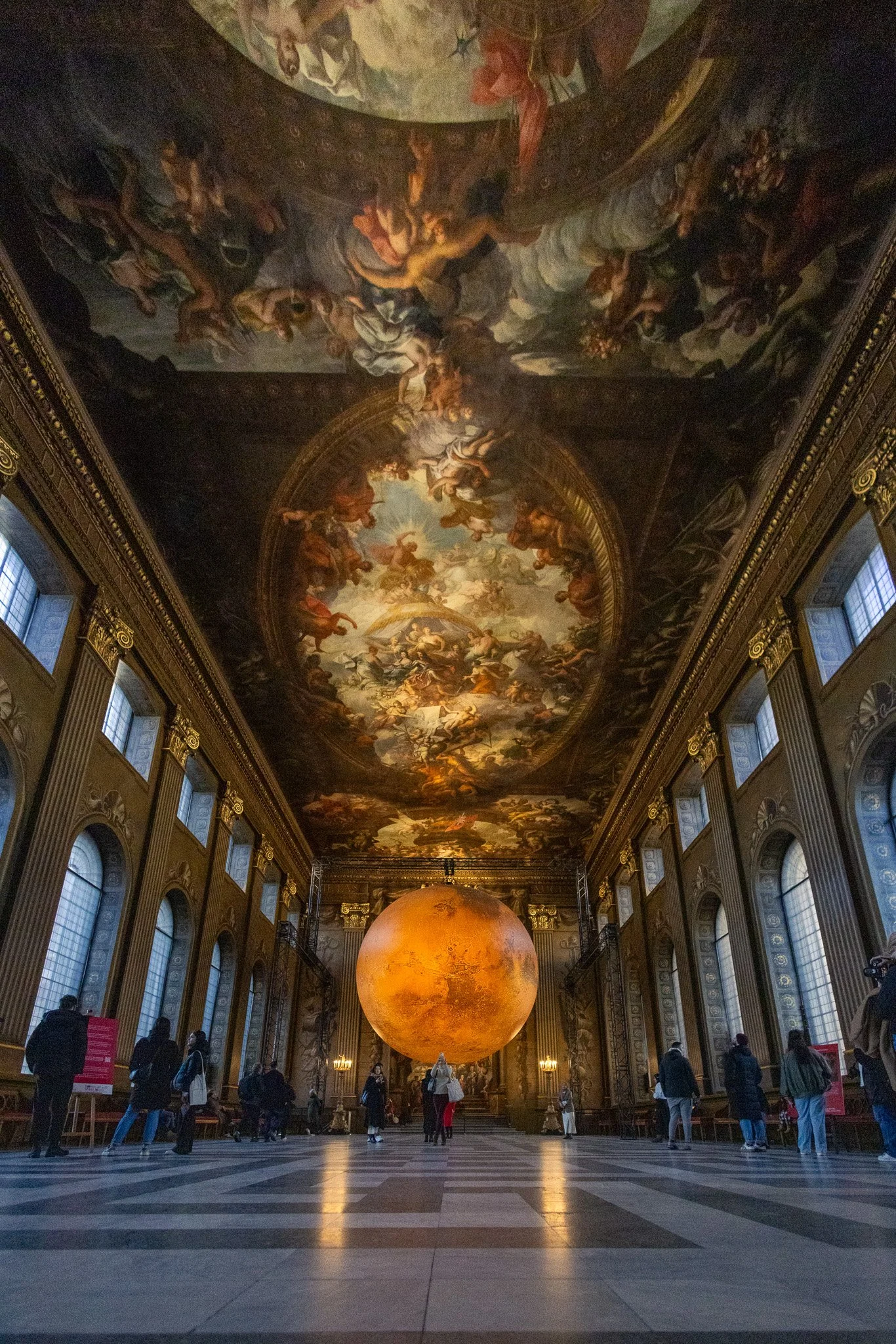
The Painted Hall is an iconic Baroque masterpiece located in Greenwich, London, within the Old Royal Naval College. Designed by Sir Christopher Wren and richly decorated by Sir James Thornhill, it has a history of cultural significance and an important role in the Maritime Greenwich UNESCO World Heritage Site.
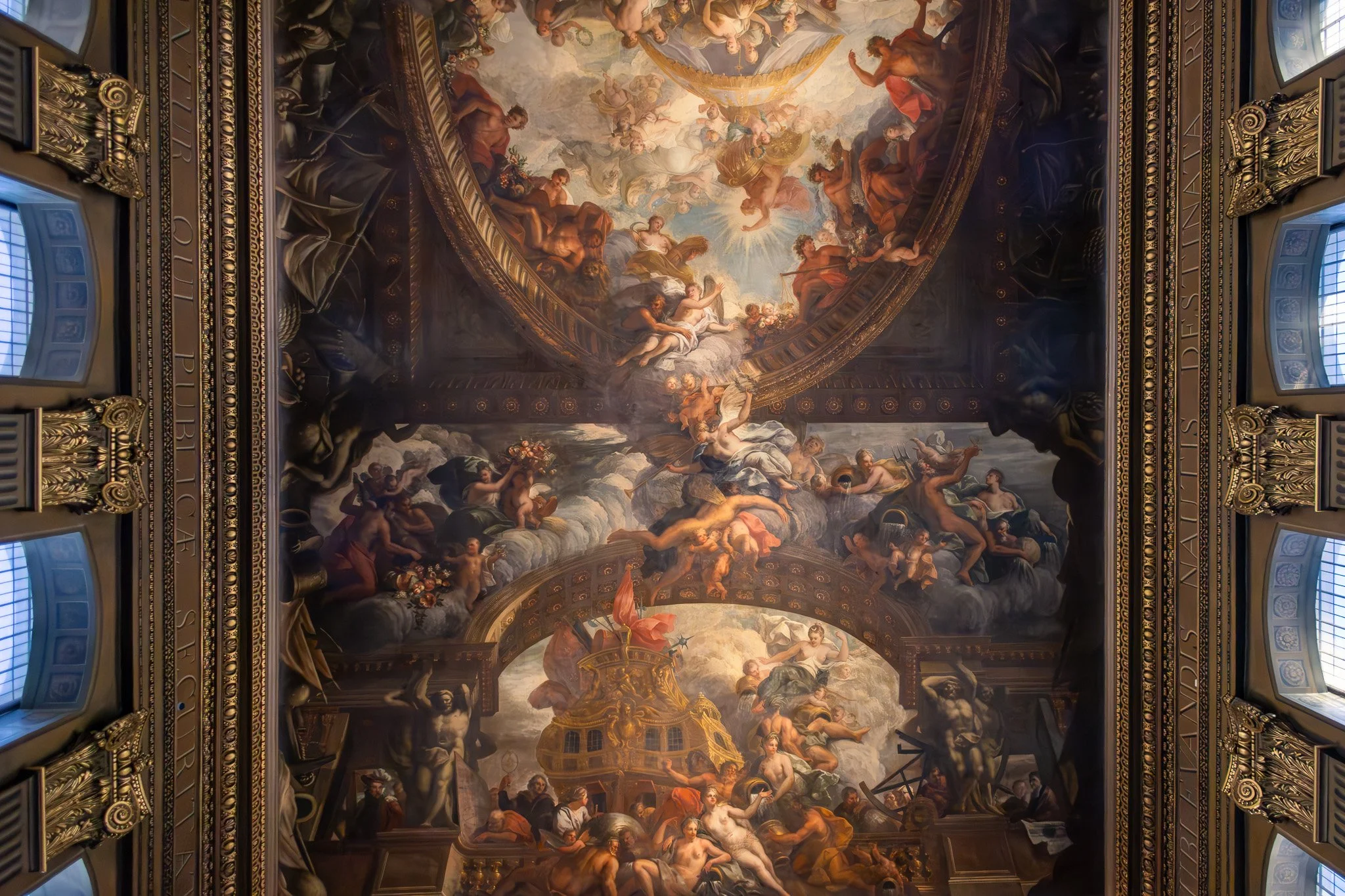
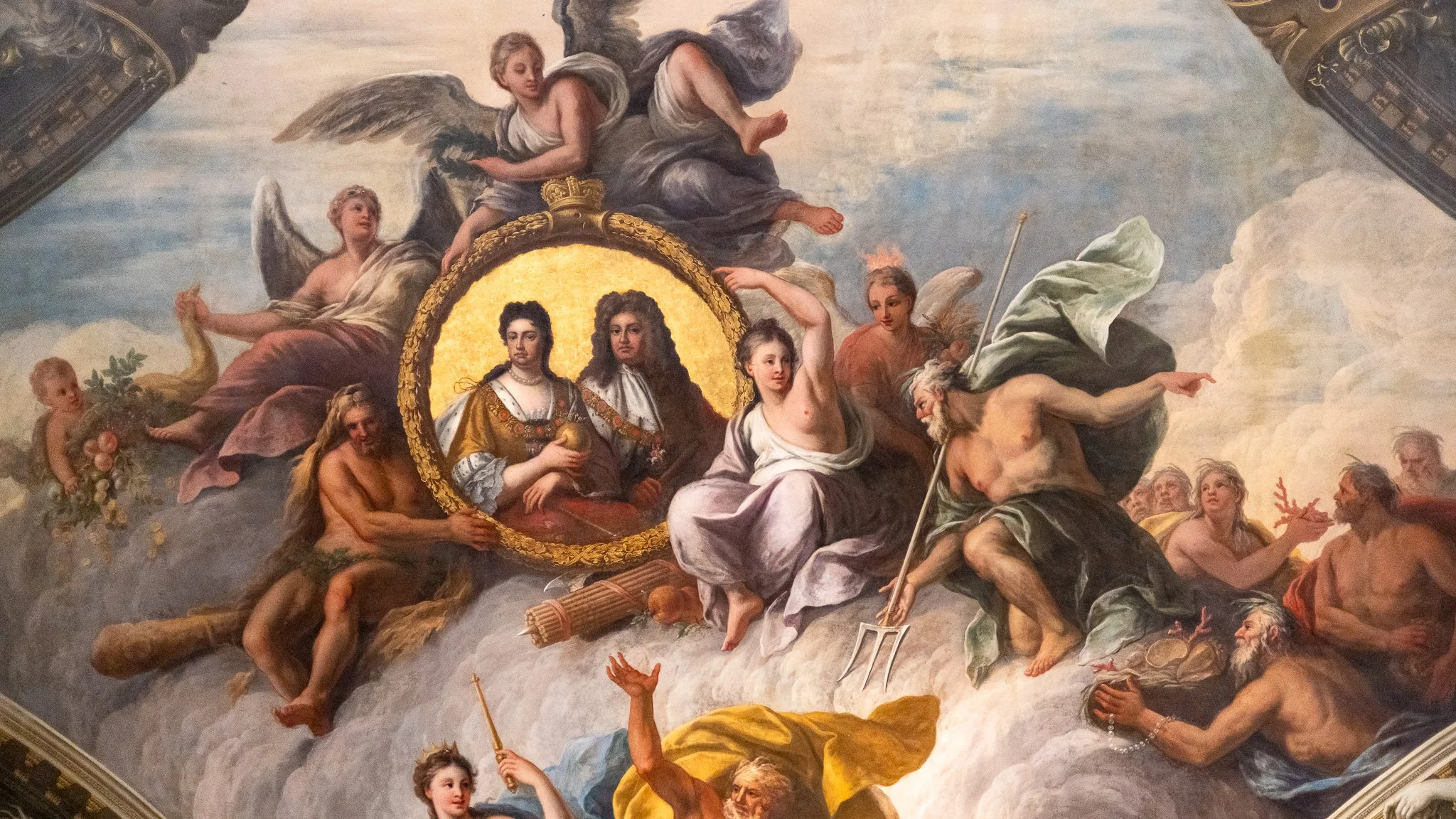
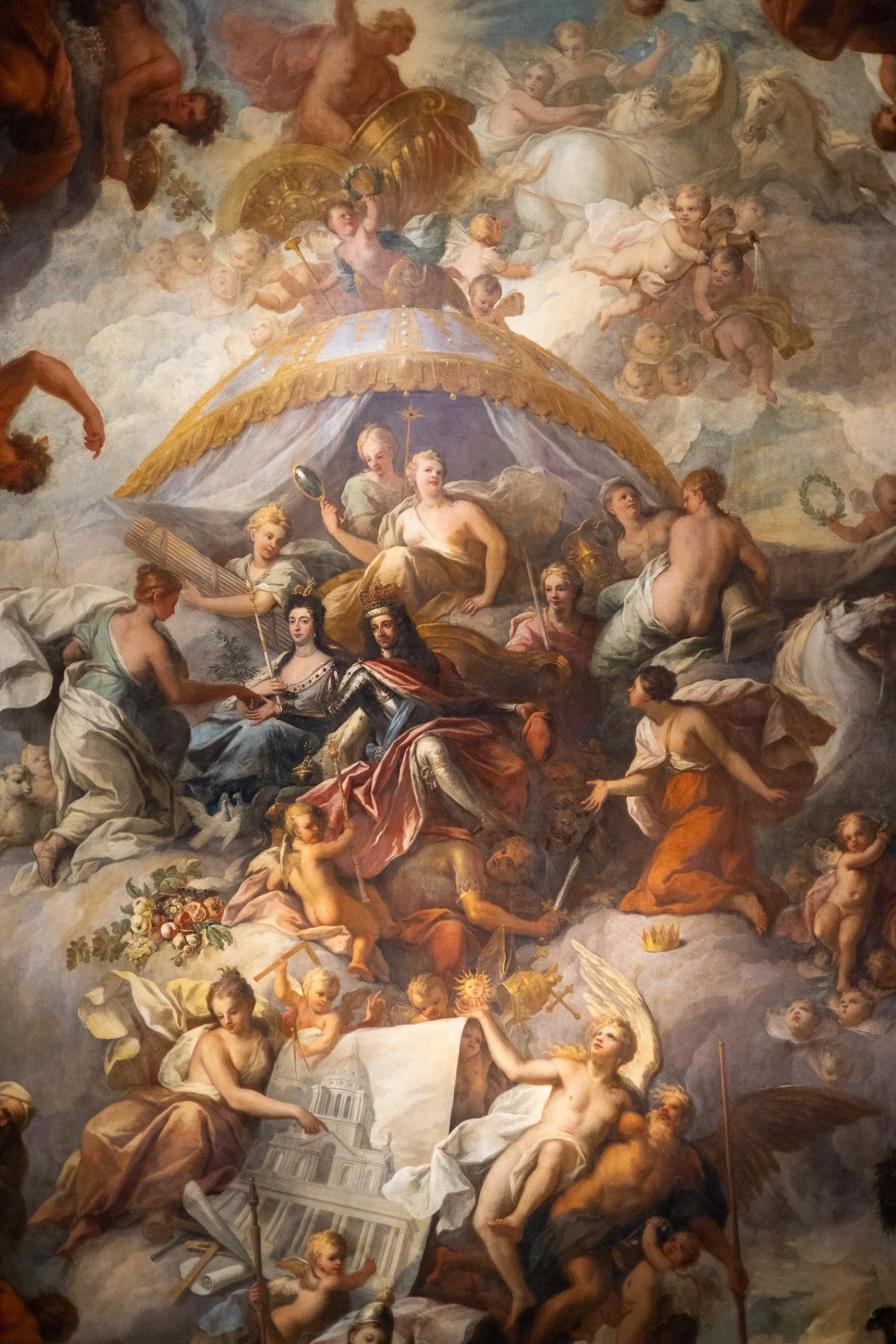
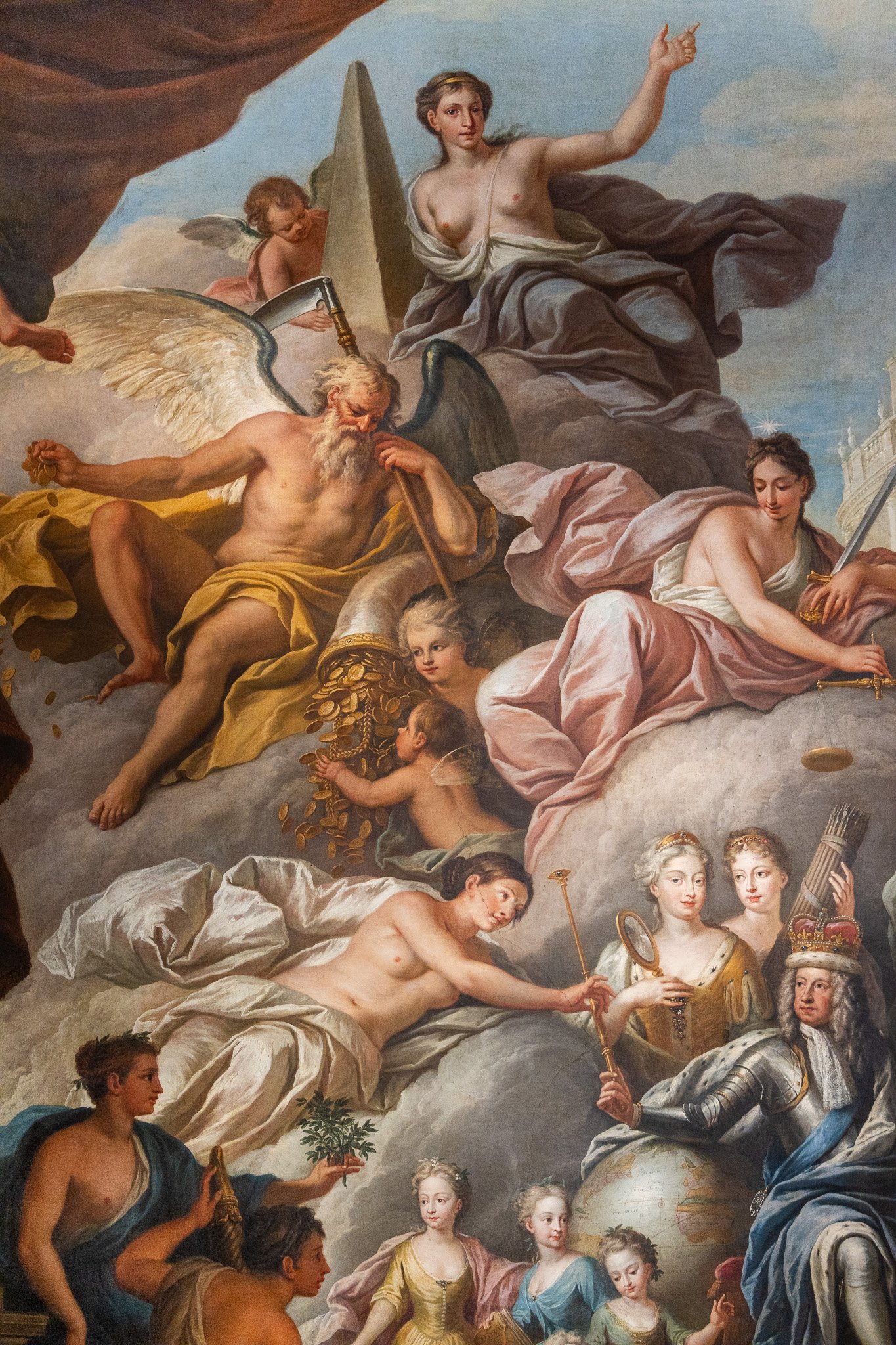
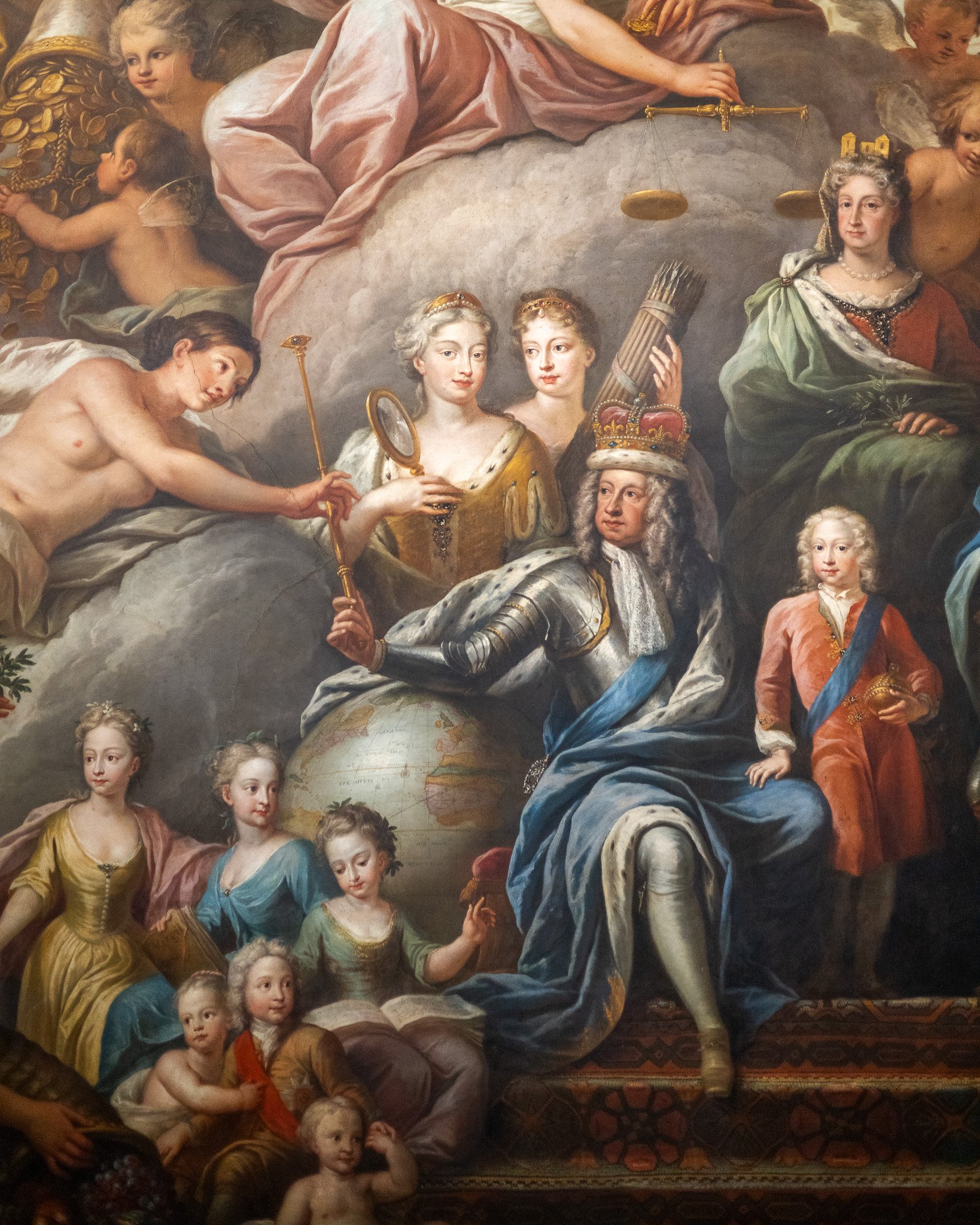
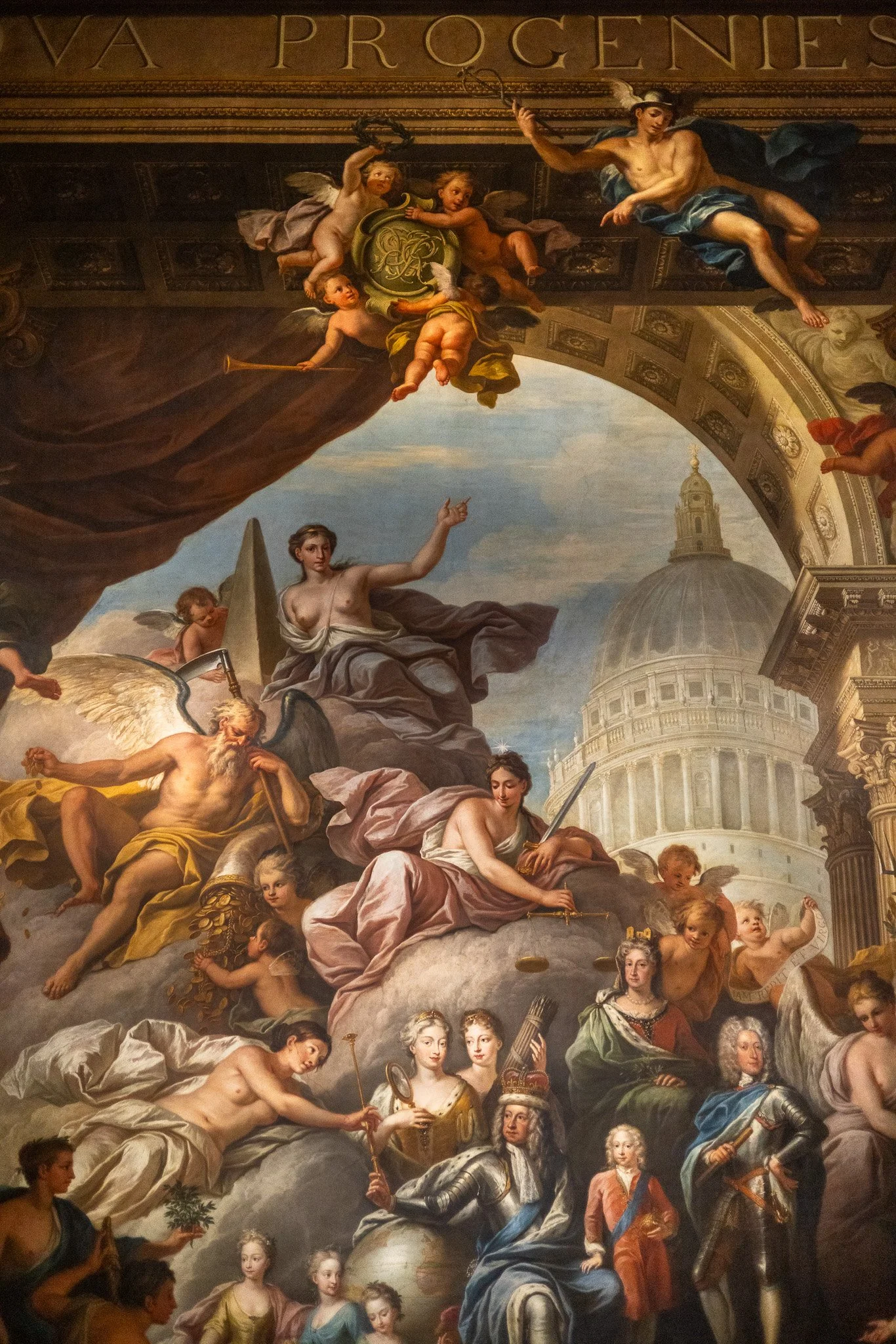
The Painted Hall was originally conceived as a dining hall for the Royal Hospital for Seamen, a charitable institution for retired sailors, designed by Sir Christopher Wren and Nicholas Hawksmoor. The building is part of Wren’s larger architectural ensemble of the Royal Hospital for Seamen at Greenwich. Sir James Thornhill was commissioned to create the hall's extraordinary ceiling and wall paintings, which span approximately 40,000 square feet. It took nearly 20 years to complete. Thornhill's work celebrates Britain’s naval prowess, monarchy, and imperial achievements. Key figures depicted include King William III, Queen Mary II, and later Queen Anne, along with allegorical representations of peace, liberty, and commerce.
The Painted Hall is regarded as one of the finest examples of Baroque art in Britain. Its intricate allegorical content reflects the political, naval, and cultural aspirations of early 18th-century Britain. The hall is often called "the Sistine Chapel of the UK" due to its visual impact. After completion, the Painted Hall's splendor led to its use as a ceremonial and public space rather than a dining hall. It was opened to the public in 1823 and became a celebrated tourist attraction. The site later became part of the Royal Naval College, where naval officers were trained. The Painted Hall was used for formal occasions, including dinners and receptions. The most significant restoration of the Painted Hall took place between 2016 and 2019. Costing £8.5 million, it involved cleaning, repairing, and conserving the paintings, ensuring their brilliance is preserved for future generations. The hall is now a celebrated cultural and tourist destination, hosting exhibitions, concerts, and events. It continues to serve as a testament to Britain’s maritime heritage and artistic grandeur.
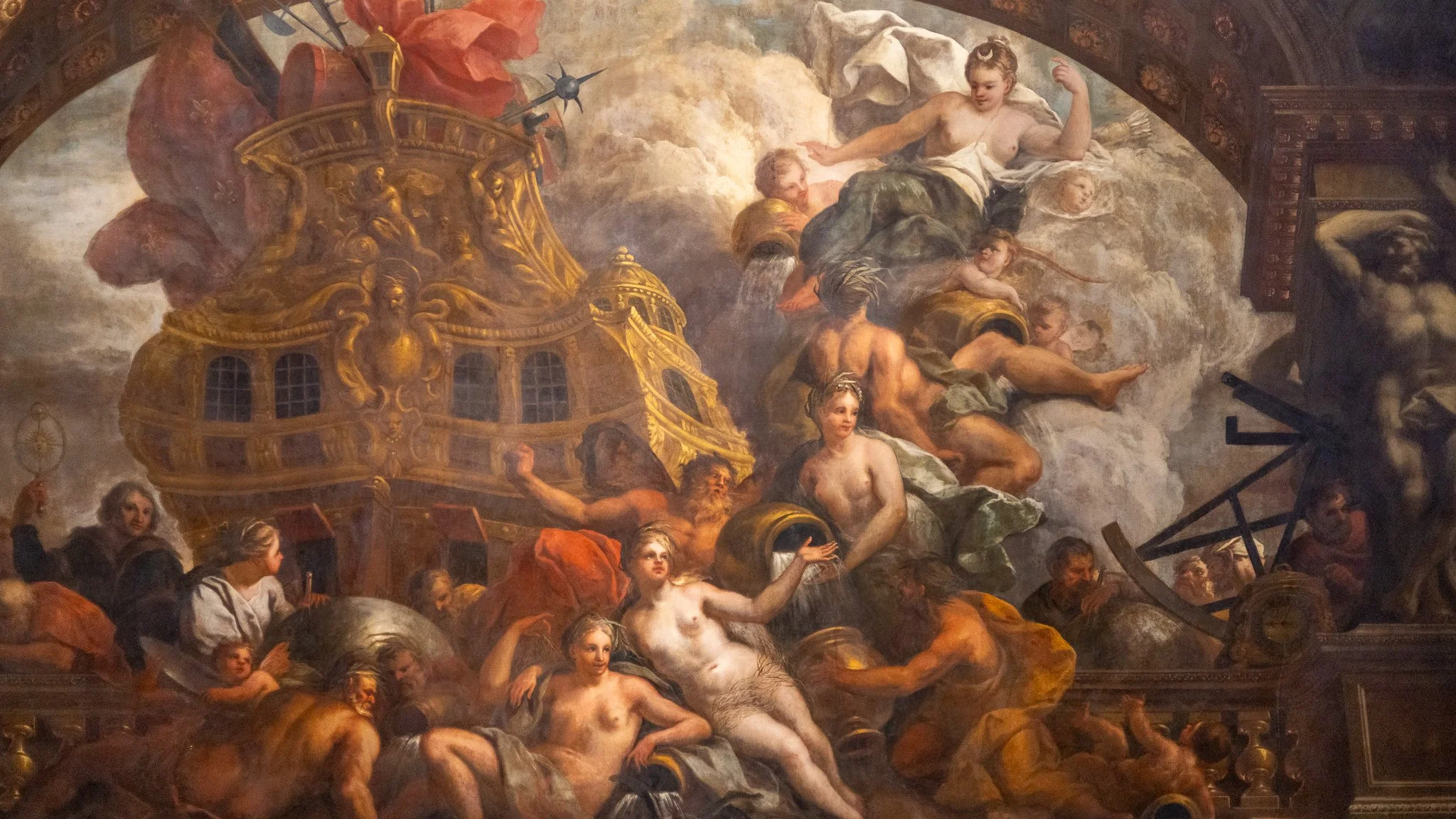
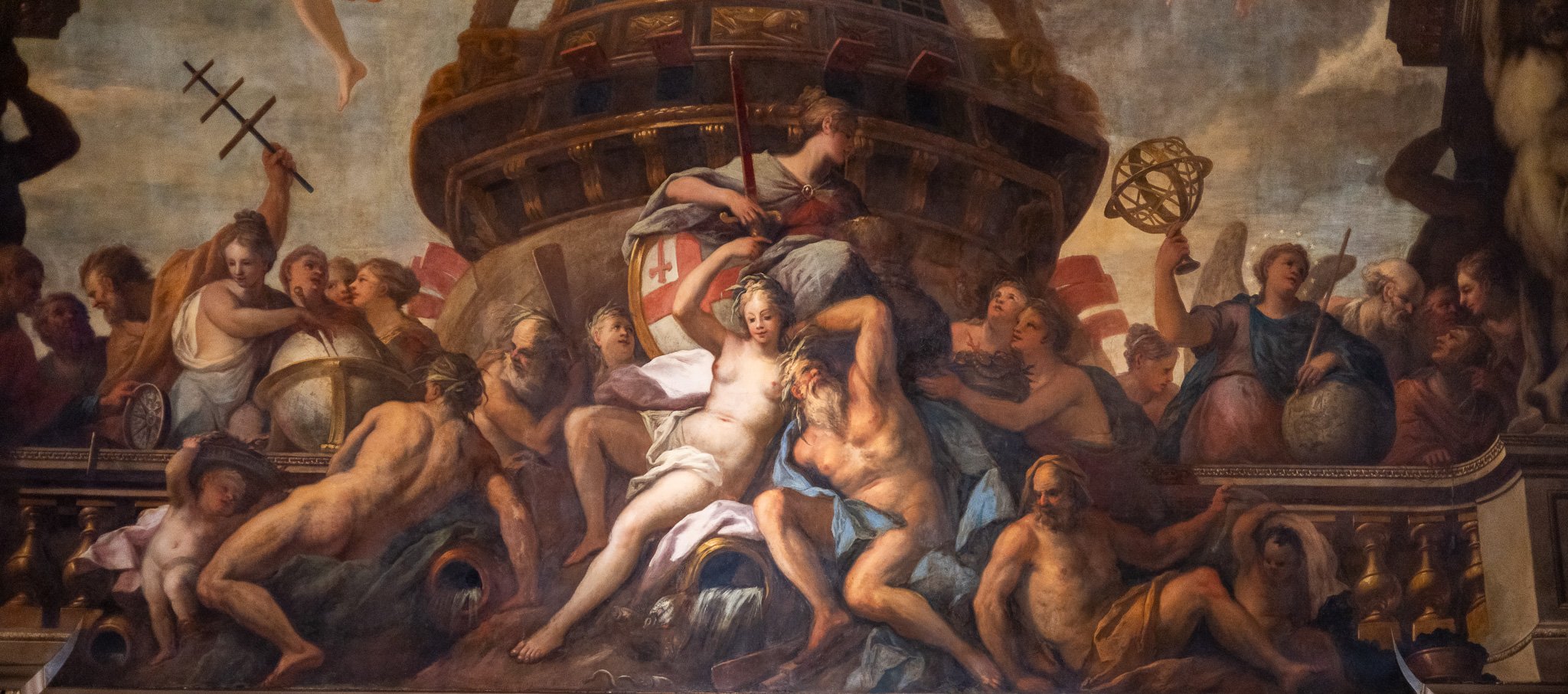
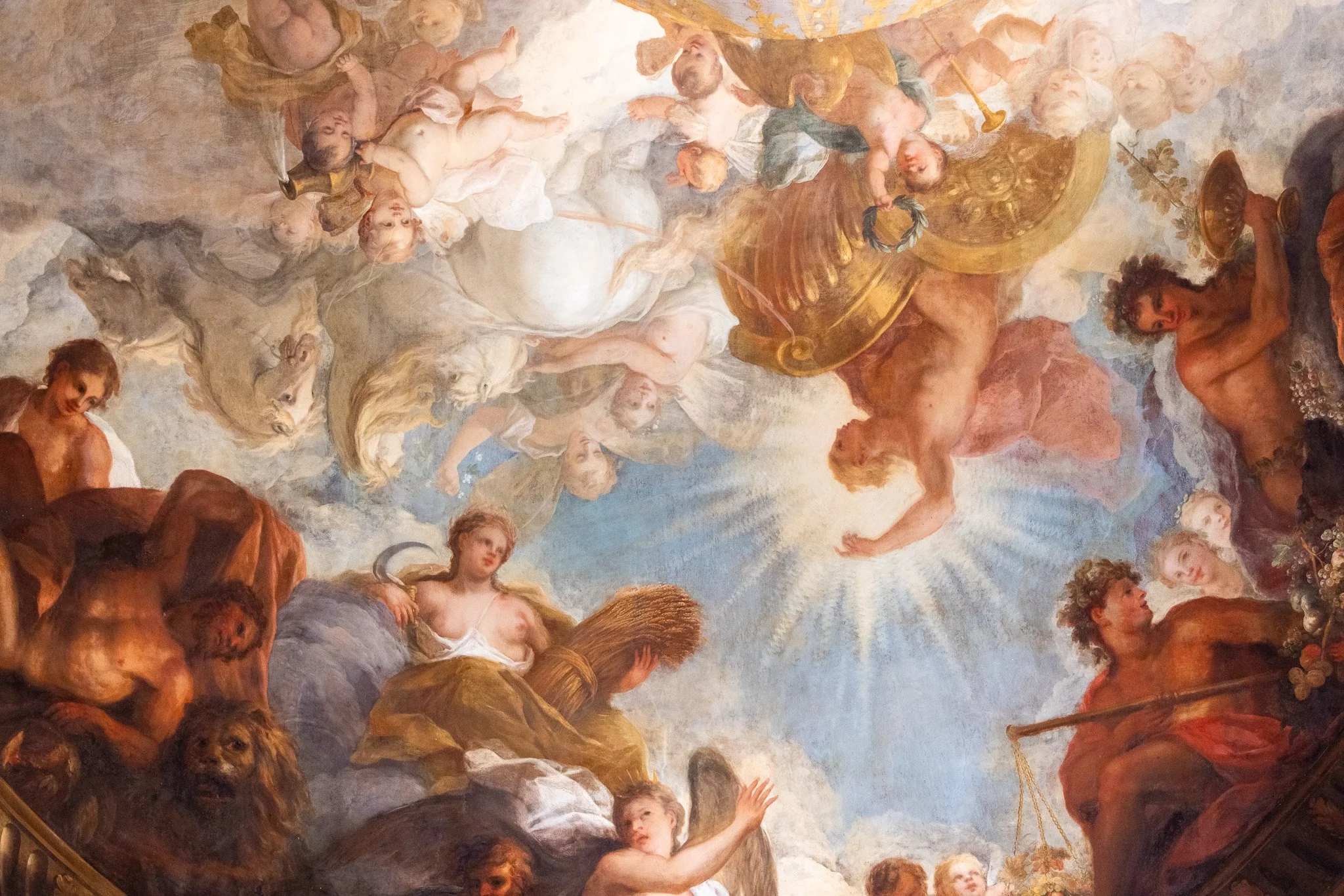
The Painted Hall exemplifies the grand, dynamic style of Baroque art, with dramatic use of light, perspective, and motion to create depth and grandeur. The iconography of the Painted Hall is a sophisticated tapestry of allegory, mythology, and history. Every panel, figure, and symbol was meticulously designed to communicate Britain’s perspective of political, naval, and imperial ascendancy in the early 18th century. The paintings include visual illusions, such as columns and balustrades that appear three-dimensional, enhancing the hall's architectural splendor.
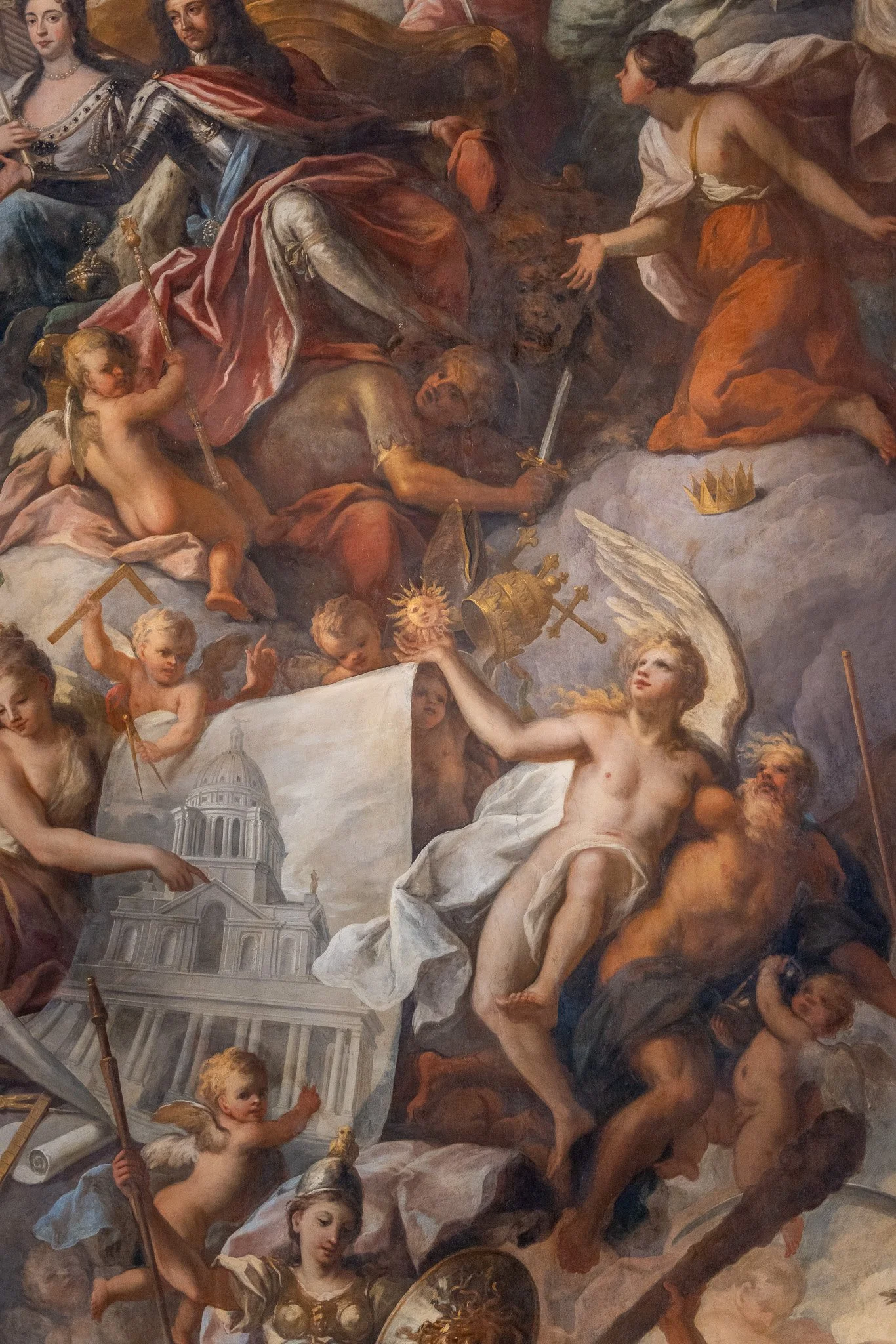
The ceiling in the upper hall features a central oval surrounded by vivid scenes. At its heart, William III and Mary II are enthroned, symbolizing their role in establishing constitutional monarchy. They are surrounded by allegorical figures representing Peace, Liberty, and Justice. Figures symbolize Europe (shown with a crown, scepter, and books, symbolizing learning and culture), Asia (depicted with exotic animals like a camel and dressed in rich fabrics, representing trade routes to the East), Africa (often accompanied by a lion and gold, symbolizing natural wealth), and the Americas (represented with a feathered headdress and exotic fruits, highlighting colonial expansion), illustrating Britain’s global reach during the Age of Exploration. Instruments and tools, including globes, compasses, and sextants, celebrate scientific progress and Britain's maritime imperial dominance. Neptune, the Roman god of the sea, is shown submitting to British power, a direct metaphor for Britain’s dominance over the oceans. Tritons, his attendants, reinforce this maritime imagery.
The west wall depicts Queen Anne and her husband, Prince George of Denmark, in a scene glorifying Britain’s victory in the War of Spanish Succession. Queen Anne is depicted as a bringer of peace and prosperity following Britain’s victory in the War of the Spanish Succession (1701–1714). Neptune holds the British crown above their heads. These emphasize the Hanoverian dynasty, focusing on King George I and the flourishing of British power during the early 18th century. The interplay of military and naval themes conveys Britain as a protector of Protestantism and liberty.
The Lower Hall section celebrates the Hanoverian dynasty's establishment in Britain. George I is shown with allegorical figures representing wisdom and strength, underscoring the legitimacy and stability of his rule. These Roman gods are prominently featured, symbolizing the flourishing of trade and intellectual progress under the new dynasty.
The interplay between mythological and historical figures subtly reinforces the idea of Britain’s divine favor and moral superiority over its rivals, particularly Catholic France and Spain. Hercules is a recurring figure, symbolizing strength and endurance, qualities attributed to Britain as a nation. Depicted as a bringer of enlightenment and arts, Apollo represents Britain as a beacon of culture. The Fates appear with their thread and scissors, a nod to the inevitability of destiny, while the Roman God Saturn (Father Time) underscores the enduring legacy of Britain’s achievements. A recurring motif throughout the hall, the sunburst, symbolizes divine favor shining upon the British monarchy and nation. Depictions of weapons, shields, and military standards are used not only as signs of power but also as symbols of protection and defense of Protestantism. The Painted Hall’s imagery serves as a propaganda piece, asserting Britain’s naval dominance, self-assumed cultural sophistication, and belief in the empires divine right to rule.